

World Cup Host Cities Warn Congress of Security Risks with 100 Days to Go
Officials from US cities set to host World Cup games warned Congress on Tuesday that a lack of federal money and poor planning could lead to major problems. The warnings come with just over 100 days left before the tournament begins.
Witnesses spoke to the House Homeland Security Committee about the urgent need to release FEMA funds that were set aside for security in the host cities. The money is currently frozen.
Officials told the committee that local agencies are struggling to work with each other and the federal government. They are trying to plan security for transportation, hotels, fan events, practice fields, and the stadiums themselves.
Other concerns raised at the hearing included the threat of drones, human trafficking, the presence of ICE agents at games, and recent cartel violence in Mexico. These issues are adding to what both witnesses and committee members described as a troubled situation.
The concerns were shared on the 11th day of a funding freeze at the Department of Homeland Security. The freeze followed deadly shootings of US citizens by ICE officers in Minneapolis. The same department handles the FEMA funds needed for World Cup security.
According to FEMA, the federal government had set aside $625 million for the 11 US host cities to improve security and readiness. Another $250 million was meant to help them deal with drone threats. Because the government cannot release the money right now, security planning has been hit hard.
The FIFA World Cup begins on June 11 in Mexico City. The first US game will be in Los Angeles on June 12, and the final will be held in New York and New Jersey on July 19. Recent violence linked to drug cartels near the host city of Guadalajara has raised worries about safety at Mexican venues.
Mike Sena, president of the National Fusion Center Association, told the committee that the country should have started planning sooner. “I feel that if we’d been having this conversation two years ago, we’d be in better shape,” he said. “But today, as we’re approaching these games, we’re nowhere near the capability we need.”
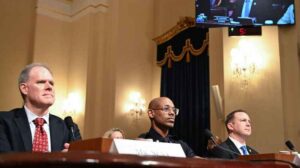
Sena added that events like the World Cup and the 2028 Los Angeles Olympics will test homeland security more than it has been in years. He said the lack of teamwork between local agencies is making things worse. “For events of this scale, that approach means serious risks may go unaddressed,” he said.
Ray Martinez, the chief operating officer for the Miami World Cup host committee, warned that time is running out. He said Miami has asked for about $70 million in federal money. Without it, the end of March will be a “drop dead date” when they must start canceling plans, starting with the Fan Fest concerts tied to the games.
“We’re 107 days out from the tournament but, more importantly, we’re about 70-something days out from starting to build the Fan Fest,” Martinez said. “These decisions have to be made. Without receiving this money, it could be catastrophic for our planning and coordination.”
Rep. Carlos Gimenez, a Republican from Florida, noted that FEMA workers who handle these grants are not working during the partial shutdown. He said the funding will not arrive “till the government reopens.”
Republicans on the committee criticized their Democratic colleagues for not holding the votes needed to release the funds.
Joseph Mabin, the deputy chief for Kansas City police, said getting the money is “critical” for hiring more staff before the World Cup. He said his department does not have enough people to cover all security threats. Kansas City will host six games and serve as a base camp for four teams.
Travis Nelson, a homeland security adviser to the Maryland governor, said salaries for many people working on the plans also depend on the frozen funds. He called this moment “pivotal” and compared it to a game of Jenga, where one wrong move “is going to cause the whole thing to come down.”
In Foxborough, Massachusetts, town officials recently asked for clarity on where to get about $8 million they need for public safety during the World Cup games at Gillette Stadium.
The White House World Cup Task Force, led by Andrew Giuliani, did not immediately respond to a request for comment.