
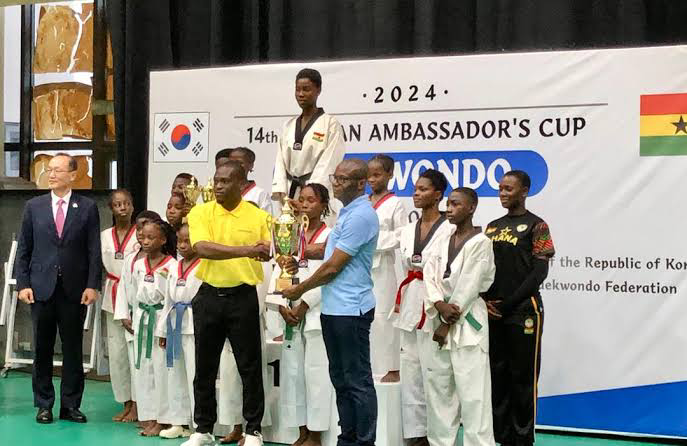
Korean Ambassador’s Cup Strengthens Ghana-Korea Taekwondo Pathway as GTF Targets Grassroots Growth
The 16th Korean Ambassador’s Cup Taekwondo Championship is expected to do more than crown winners when athletes converge at the Borteyman Sports Complex on Saturday, August 29.
The Ghana Taekwondo Federation (GTF) is viewing the competition as part of a broader pathway for developing athletes and strengthening its relationship with the Republic of Korea.
More than 120 athletes are expected to participate in the one-day championship, which will feature Kyorugi for cadets and juniors and Poomsae for athletes under 17.
The Embassy of the Republic of Korea says the event is designed to provide young athletes with valuable competitive experience while promoting the core values of Taekwondo.
Speaking exclusively to The BAC Sports, GTF Media Representative Officer Davis Nii Attuquaye Clottey explained that the importance of the championship extends beyond the medals that will be won at Borteyman.
For the Federation, the competition provides an avenue to assess how athletes are developing while creating opportunities that could eventually lead to international exposure.

“This is very significant when it comes to development of Taekwondo in the country,” Clottey said.
The partnership with the Korean Embassy is central to that ambition. According to Clottey, the Embassy’s involvement has gone beyond the organisation of the annual championship to supporting the Federation with equipment and other resources required for athlete development.
He pointed to uniforms and protective equipment previously provided by the Embassy, including support that benefited Ghana’s Taekwondo team during the African Games.
From Borteyman to Korea
Perhaps the most significant aspect of the relationship is the international pathway it can create for Ghanaian athletes.
Clottey revealed that outstanding athletes can be selected for opportunities to compete in Korea, where they come up against competitors from different countries.
He cited Ghanaian athlete Henrietta Naa Ayele Armah, who travelled to Korea about six years ago and won gold at the Korean Ambassador’s Cup there. “That shows you the role that the Embassy plays in the development of Taekwondo in Ghana,” Clottey said.
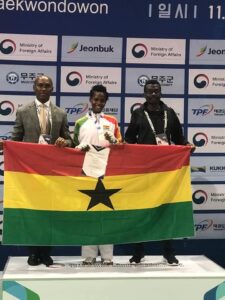
The opportunity is significant because it gives athletes a chance to move beyond domestic competition and experience a higher level of international competition. Clottey explained that selected athletes travelling to Korea are fully sponsored by the Embassy.
The relationship is also entering a new phase. The GTF recently renewed its partnership with the Korean Embassy, with both sides committing to deeper cooperation in expanding Taekwondo, particularly at the grassroots level.
The Embassy has pledged further technical assistance and equipment, while the GTF has outlined plans to broaden its grassroots programmes and introduce Taekwondo into schools.
That broader development agenda gives this year’s Ambassador’s Cup added relevance.
Clottey said the Federation has spent between three and four months preparing for the competition, with technical and organisational arrangements already in place.
Youth Development Takes Centre Stage
This year’s championship has also been deliberately structured around younger athletes. Unlike last year’s two-day competition, the Federation has reduced the event to one day, with a particular emphasis on cadets aged 10 to 14 and juniors aged 15 to 17.
The PRO believes this focus is necessary because young athletes need regular opportunities to compete if they are to develop into future national stars. “When you develop the youth, you have a future,” he said.
More than 120 athletes have registered, while five weight categories will be available for both the cadet and junior Kyorugi divisions.
The PRO expects strong competition because some of the athletes have had limited opportunities to compete in recent times. For him, the championship provides a valuable test of whether the skills developed during training can withstand the pressure of an official contest.
Beyond the competition itself, the Federation will recognise outstanding performers with awards for the best male and female athletes in Kyorugi and Poomsae, as well as a best regional association award based on Poomsae performances.
Admission to the championship is free, giving fans and families an opportunity to watch the young athletes compete.
For the GTF, however, the bigger objective extends beyond Saturday. The Korean Ambassador’s Cup represents one link in a longer chain: identify talent locally, provide the equipment and competitive experience needed to develop it, and ultimately create opportunities for Ghanaian athletes to compete on the international stage.