
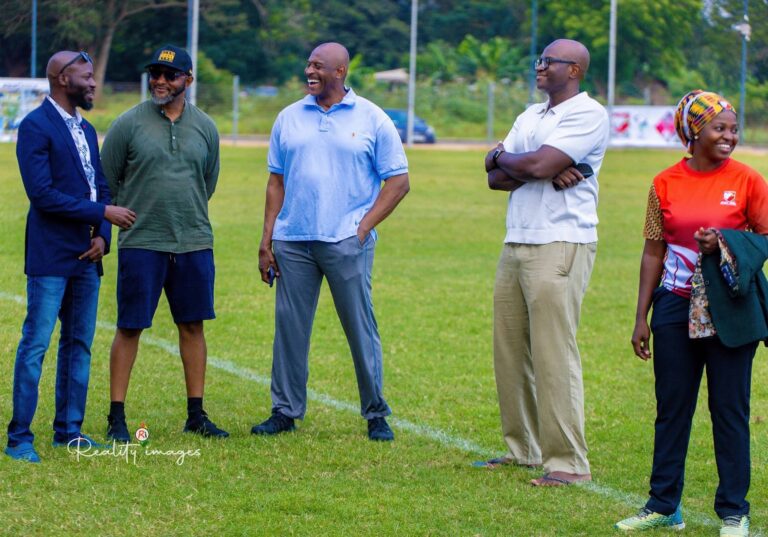
In the wake of 2025 Rugby Heritage Cup clash between Ghana and Nigeria, Rugby Africa President Herbert Mensah outlined a comprehensive vision for the strategic development and growth of rugby across West Africa.
Speaking to key stakeholders following the final whistle Mr. Mensah emphasized the critical need for enhanced competitive structures to unlock the region’s significant potential in the sport.

The Imperative for Regular High-Level Competition
President Mensah underscored the importance of establishing a consistent calendar of high level matches for West African nations. He pointed to the existing model in other parts of the continent as a benchmark for success.
“To achieve competitive excellence, it is essential that our West African nations engage in regular, high calibre rugby competition,” Mensah stated. “In East Africa, nations such as Kenya, Uganda, Zimbabwe, and Zambia maintain a robust schedule of matches, which has been fundamental to their development and consistent performance.”
He reflected on the evolution of regional competitions, noting, “While the past featured tournaments like the Trial Nations, today we are building new traditions with the Heritage Cup. We are also encouraged by the emergence of teams like Ivory Coast. These nations represent some of the top-ranked teams in Africa, and their continued competition is vital for the sport’s progress.”
Mensah praised the recent Ghana Nigeria match as a clear indicator of the rising standards of African rugby. “The match was a display of exceptionally high quality and, most importantly, was contested in an exemplary spirit of sportsmanship. It was a genuine pleasure to witness,” he remarked.

Recognizing Emerging Talent and Potential
The Rugby Africa president highlighted the immense promise of Nigeria, describing the nation as a future powerhouse in the global rugby landscape. “With a population exceeding 250 million and a deep seated sporting culture, Nigeria possesses all the attributes to become an formidable force in world rugby once the necessary structures are firmly established,” Mensah said.
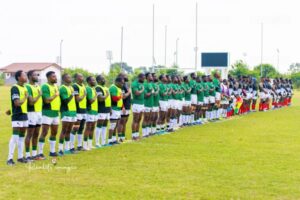
He also commended the leadership of the Nigeria Rugby Football Federation and celebrated the fact that both teams fielded squads comprised largely of homegrown talent. “It was particularly encouraging to see that the majority of players representing both Ghana and Nigeria were developed locally. This clearly demonstrates the depth of indigenous talent available within our region,” Mensah observed.
Addressing Structural Foundations: A Call for Institutional Integration
A key pillar of Mensah’s address focused on the foundational systems required for sustainable growth. He identified the integration of rugby into national education curricula as a primary objective, a strategy already successfully implemented in several other African nations.
“A significant challenge we face, both in Ghana and across the region, is the formal inclusion of rugby within school systems,” Mensah explained. “We are actively engaging with Honourable Ministers of Education and Sports to advocate for rugby’s inclusion in school curricula. This systemic approach is crucial for nurturing students from a young age, instilling not only rugby skills but also the core values of discipline, nutrition, and fitness inherent in modern sport. This is the foundational element currently missing in many of our nations.”
A Call for Regional Collaboration
Looking toward the future, President Mensah proposed a united front among West Africa’s leading rugby nations to accelerate development. He called for collaborative efforts to create a more competitive regional landscape.
“In the immediate term, we must foster stronger collaboration among the leading rugby nations of West Africa Ghana, Nigeria, Ivory Coast, and Senegal,” he proposed. “By bringing these nations together for regular competition and potentially establishing a dedicated regional tournament, we can ensure that West African rugby ascends to its rightful place on the global stage.”