
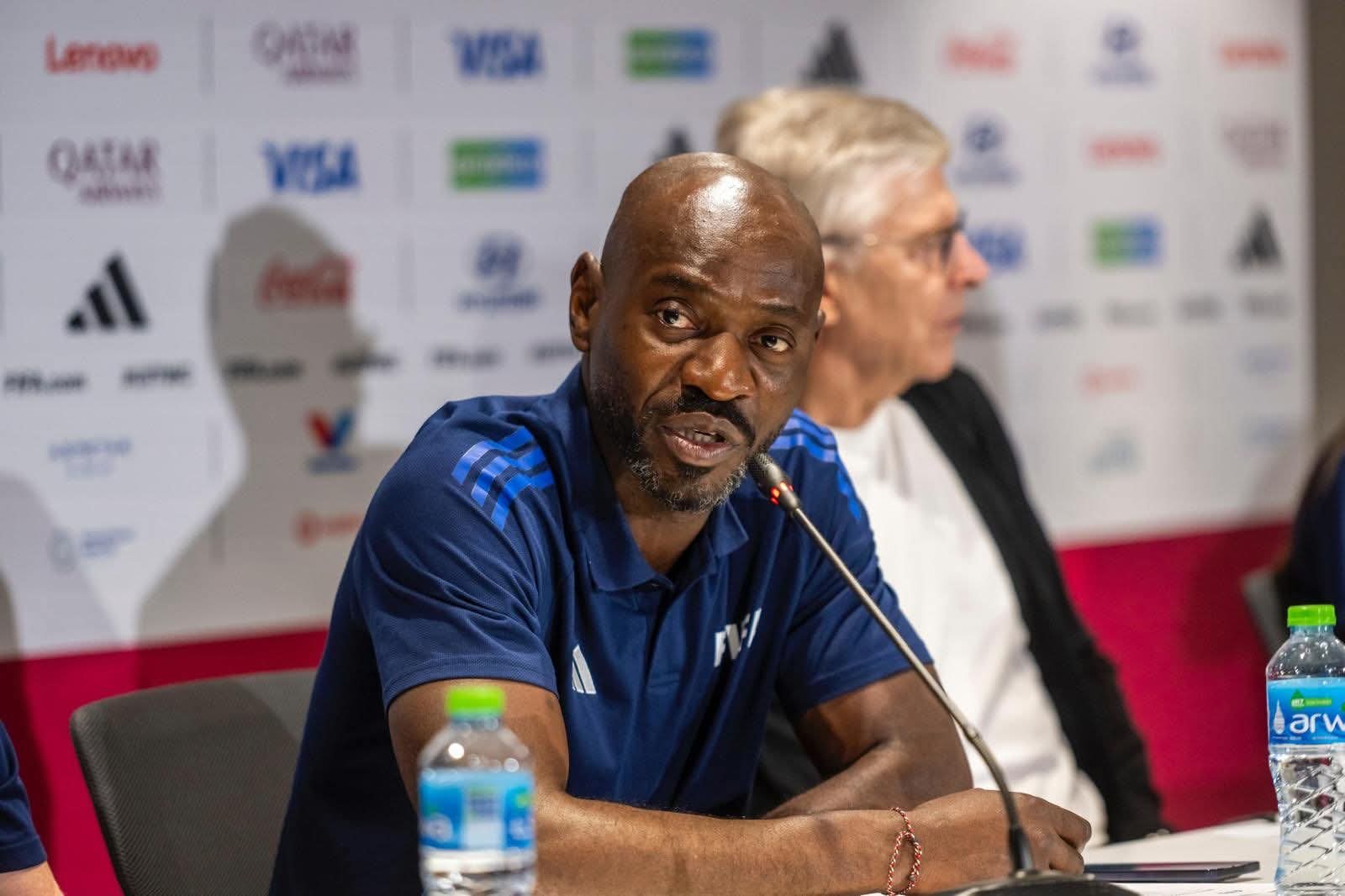
In a response to Nigeria’s formal petition to FIFA, Hérita Ilunga, the Director of Football for the Democratic Republic of Congo, has asserted that global football governance prioritizes “sporting nationality” over legal technicalities, and advised Nigeria to concentrate its efforts on the upcoming Africa Cup of Nations (AFCON).
The controversy stems from Nigeria’s appeal to world football’s governing body, alleging that DR Congo fielded ineligible players during their recent CAF World Cup qualification playoff matches. The Super Eagles’ petition seeks a review of the eligibility of certain Congolese players, potentially challenging the playoff result.
Ilunga, a former Congolese international defender, issued a statement that blended formal critique with competitive rhetoric.
“FIFA does not reason in terms of legal nationality but rather in terms of sporting nationality,” Ilunga stated, underscoring a fundamental principle in international football governance regarding player eligibility. “If that is the case, I advise you, dear Naija brothers, to focus more on the AFCON.”
His comments escalated with a direct challenge to the Nigerian football authorities’ approach.
“If you can’t win on the pitch, don’t try to win from the back door,” Ilunga continued. “The World Cup has to be played with dignity and confidence. Not with lawyers’ tricks. Bring it.”
The statement reflects growing tension between the two African football powerhouses following a tightly contested playoff series. While the specific players in question and the exact nature of Nigeria’s legal argument have not been fully detailed publicly, the petition suggests a dispute over compliance with FIFA’s regulations on international player transfers and nationality switches.
FIFA’s rules on eligibility allow players to switch national teams under specific conditions, particularly if they have not played a competitive senior match for one nation and hold a genuine connection to another. The concept of “sporting nationality” Ilunga referenced often relates to these binding, football specific decisions, which once made, are typically irrevocable for the player.
The Congolese response positions the petition as sportsmanship rather than a legitimate sporting grievance. By invoking the forthcoming AFCON, Ilunga redirects the narrative toward on-field performance and regional rivalry.
Nigeria’s Football Federation has yet to issue a formal rejoinder to Ilunga’s comments. The petition itself remains under review by FIFA’s disciplinary committee, which will examine the documentation from both federations before rendering a decision. Such processes can take several weeks, during which the qualification status may remain provisional.
For now, DR Congo appears confident in its legal and sporting position, choosing to confront the challenge head on with a public and unequivocal defense.
The broader African football community will be watching closely, as the outcome could impact not only the World Cup qualifiers but also the atmosphere surrounding the AFCON, where both nations hope to compete with focus and with good performance.