
Remote Technical Analysis Model at AFCON Morocco 2025: A game changer
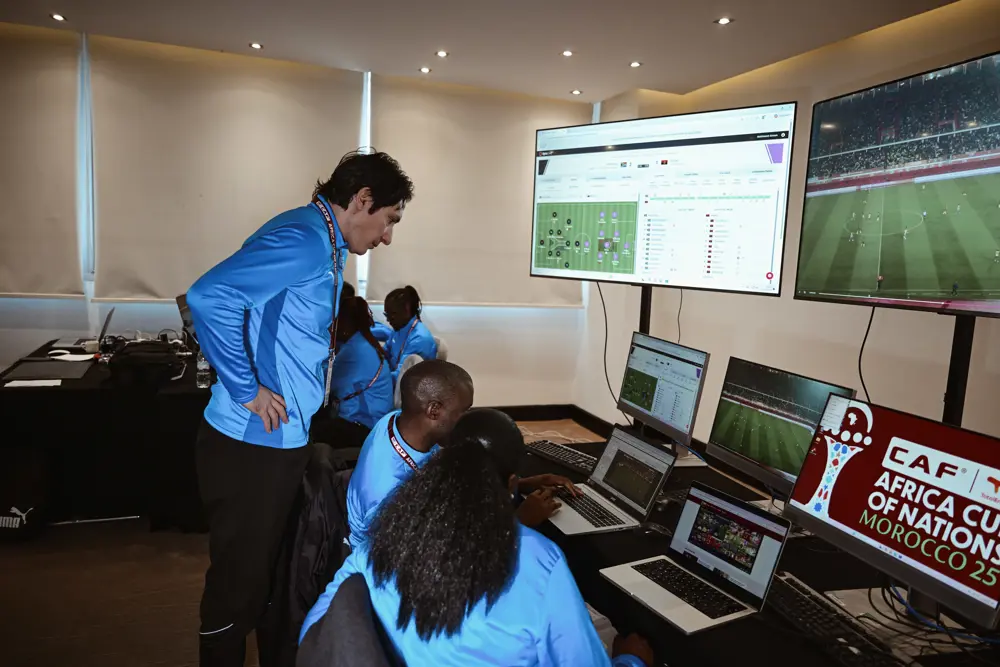
The Confederation of African Football (CAF) has taken a significant step into the future of football analysis with the introduction of a fully integrated, remote-based technical analysis model at the TotalEnergies CAF Africa Cup of Nations Morocco 2025, a first in the history of the competition.
Implemented during the group phase, the new system is powered by live data platforms, multi-angle video feeds and dedicated video analysts, marking a decisive shift away from traditional, manual reporting methods towards a modern, collaborative and data-driven approach.
According to CAF Technical Study Group (TSG) Leader Belhassen Malouche, the transformation was necessary to match the rapid evolution of the modern game.
“Football is improving, but also the technology and the way matches are analysed,” Malouche said. “If football is evolving, we also need to evolve. This required us to grow and work in the same environment as the top global football competitions.”
Collective analysis at the center of the game
In previous editions of the TotalEnergies CAF AFCON, TSG members worked largely in isolation. Analysts were stationed at stadiums, producing individual reports with minimal collaboration. Tactical diagrams were drawn by hand, reports were written manually and video integration was limited.
“At times, we were working in the same way we had worked 20 years ago,” Malouche explained. “Each expert observed matches alone, designed reports on their own and had very little opportunity to exchange with the rest of the group.”
For Morocco 2025, CAF introduced a remote analysis structure that redefined how technical insights are generated. TSG members were organised into four teams of three, each made up of two technical experts and one video analyst. Every group analysed one match, compiled a comprehensive technical report the following day and then moved on to the next fixture.
Crucially, the model enabled daily coordination meetings, allowing TSG members to share observations, identify tactical trends and align findings across matches and venues.
“We now have real exchange,” Malouche said. “The discussions are productive in terms of tactics, trends and logistics. We know what is happening across the whole competition, not just in one stadium.”
The innovative approach signals CAF’s commitment to embracing technology and collaboration, ensuring that technical analysis at AFCON continues to evolve in step with the modern game.