
Mauritian FA president breaks silence on AFCON final controversy and calls for change at African football’s governing body
It is rare for executive committee members of the Confederation of African Football (CAF) to speak publicly about what happens inside the organisation. Most prefer to stay quiet, following an unwritten rule that discourages talking to outsiders.
So it came as a surprise when a PR consultant, who used to work for FIFA, contacted me to say that Samir Sobha was ready to talk. The president of the Mauritius Football Association wanted to speak openly about the problems facing the 69-year-old organisation.
In a 45-minute conversation, Sobha broke ranks with his exco colleagues to share his views on several issues. He did not hold back.
Why he decided to speak
“I think there has been an injustice done to the Moroccan national team,” Sobha said. “I’m talking in my name personally, as president of the Mauritius FA. I wanted to plead with the Moroccan FA to forgive us for the injustice done to them. The rules have not been respected as it should have been in this match.”
Sobha was referring to the 2025 AFCON final, where Senegal beat Morocco. The match had been surrounded by controversy after Senegalese players briefly left the field.
When asked what his fellow FA presidents thought about the matter, Sobha said: “From the echo that I get, after talking to my fellow presidents, the feeling was that the rules were not respected. It’s clear that after the Senegalese team left the field, all the players should have been sanctioned with a yellow card.”
Questions over referee instructions
During the interview, the issue of whether the head of the referees committee had told the centre referee not to issue yellow cards was raised.
“I don’t know who instructed the referee,” Sobha responded. “But whoever instructed the referee has to deal with the consequences of that.”
Asked if that person should pay for their actions, Sobha replied firmly: “For sure.”
Sobha, who watched the final from the VIP section, described what he witnessed among his colleagues: “Most of the FA presidents agreed that the Senegalese team should go back to the field and finish the game. I’m not saying we should not give the trophy to the Senegalese team. What has happened has happened already. We can’t change it. But we should put our ego aside and agree that an injustice has been done to the Moroccan national team.”
He added: “I agree that there has been an injustice, and I want to make sure that this kind of thing doesn’t happen again. I want to plead with the Moroccan national team to forgive me, for not having reacted earlier.”
Sobha confirmed that he has verbally expressed his support to Fouzi Lekjaa, the president of the Moroccan Football Federation, who has not yet responded.
Problems with CAF leadership
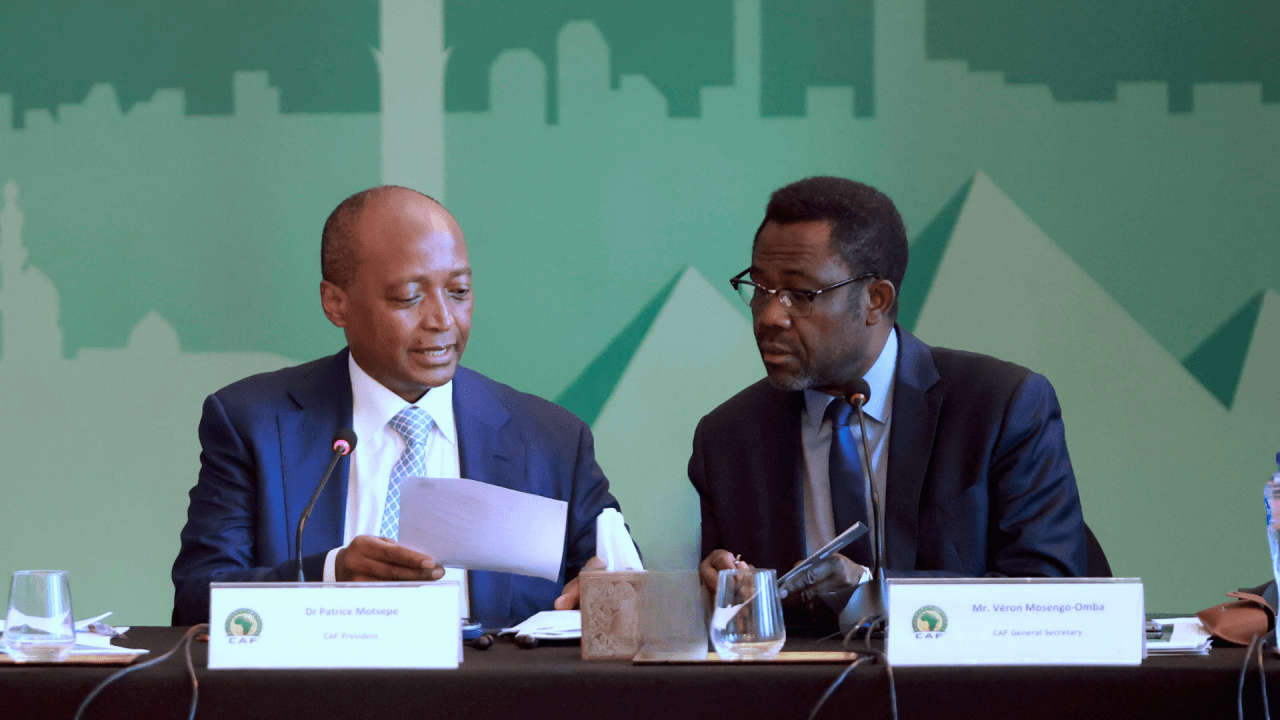
When asked what is going wrong at CAF, Sobha pointed to issues with the General Secretary, Veron Mosengo-Omba.
“He (Motsepe) should lead CAF through his SG. But right now, I don’t think that the SG is in any legal position to make decisions, to sign a document,” Sobha said. “We are not on the right track. I’m pleading with the president to rectify this position.”
Sobha made it clear that he does not believe the situation is acceptable. Asked directly if Mosengo-Omba should no longer serve as General Secretary, Sobha answered: “Correct.”
The move to a four-year AFCON
CAF is considering holding the Africa Cup of Nations every four years instead of every two years. Sobha shared his thoughts on this proposal.
“When we see the profit that we made in Cameroon and in the Ivory Coast, and we compare it to the profit that we made in Morocco, it’s more than doubled,” he said.
But he admitted there are no guarantees. “There’s no guarantee. But if it will be the same, as it happened in Morocco right now, I’m with it.”
When it was pointed out that changing to a four-year cycle could mean some players miss their only chance to play in an AFCON, Sobha acknowledged the concern. “I do realise it,” he said, though he noted that Europe holds its championship every four years.
Pressed on whether African football’s situation is the same as Europe’s, Sobha agreed it is not. However, he defended CAF’s new competitions, including the African Nations League, saying: “We should start somewhere and make things happen.”
He also addressed the failed African Super League experiment. When asked if African football was becoming “a laboratory for experiments,” Sobha responded by pointing to the success of the Nations League in Europe.
“Why won’t it work for Africa?” he asked.
When reminded that Africa makes up only 2-3% of world trade, Sobha said: “Africa is a rich continent… We should start somewhere and make things happen, so that in the future, we won’t say we didn’t try.”
The role of member associations
Sobha agreed that the CAF Congress, made up of 54 member associations, is the supreme body of CAF according to its statutes. But he did not explain why this is not always recognised in practice.
On the issue of rule changes, Sobha was careful. When asked why the CAF president was proposing changes to the disciplinary code when such proposals normally come from member associations, Sobha declined to answer directly, saying he did not know the CAF statute well enough.
What happens next?
Sobha made it clear he would not accept Mosengo-Omba continuing as General Secretary. “As an exco member? No, I won’t accept it. Even in the previous exco meeting, had Mr Mosengo been there, I would have voiced it out, to let everyone know, including the president, that I don’t agree that Mr. Mosengo will be sitting there, as his contract has expired already.”
Comparing past and present
When asked to compare the presidency of Ahmad Ahmad with the current leadership under Patrice Motsepe, Sobha said: “Presidents of FAs were more respected before than now. And I hope that this changes, that we give more respect to the FA presidents.”
He gave an example from the last AFCON, where some FA presidents were initially placed in the VIP section rather than the VVIP area where they usually sit. The situation was only changed after they threatened not to attend matches.
“It’s not fair,” Sobha said. “They are FA presidents. People that don’t have anything to do with football are sitting in the VVIP. This is disrespect to these people.”
He added: “I want to plead with these people to forgive us, as exco members. I was ready to give my ticket to someone, a president, to go to the VVIP, while I sit in the VIP. These people have voted for us to be in the exco. And I think that these people need these places more than us.”
Final message
In closing, Sobha urged unity: “I don’t think that I have much more to say, other than to plead to all our people in CAF, to all the MA presidents, and the president himself, and older people who are around in African football, that we should make sure that things happen in Africa and we should stop fighting amongst ourselves.”