The Black Stars of Ghana: Assessing Readiness and Addressing Critical Gaps Ahead of the World Cup
A Missed Opportunity That Revealed Deeper Problems
Ghana’s failure to qualify for the 2025 Africa Cup of Nations stands as one of the most disappointing outcomes in the recent history of the Black Stars. While the absence from the continental showpiece is painful in itself, the greater consequence lies in what has been lost. A vital opportunity to test the team’s strength and cohesion against top African opposition before the World Cup in the United States.
The teams that progressed ahead of Ghana, Angola and Sudan proceeded to make minimal impact at the tournament itself. Their unremarkable performances serve as an uncomfortable indicator that Ghana’s failure was not simply a matter of being edged out by exceptionally strong opponents. Rather, it points to fundamental deficiencies within the team, including serious questions about the level of coaching and the overall squad composition.
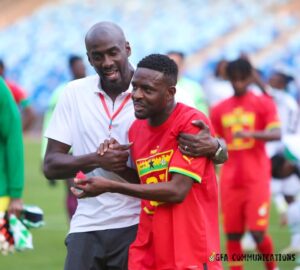
As the World Cup approaches, the technical team led by Otto Addo faces a race against time to identify solutions to persistent problems across multiple positions. The upcoming international friendlies represent the final opportunities to experiment, assess, and make crucial decisions before the global showpiece begins.
The Right-Back Conundrum
The right-back position presents perhaps the most immediate cause for concern. Tariq Lamptey’s ongoing injury struggles leave his availability for the World Cup in serious doubt. Even if he recovers, his lack of consistent game time raises questions about his match sharpness at the highest level.
Alidu Seidu, the natural alternative, has failed to convince in the Black Stars jersey. His performances have been marked by inconsistency, and he has yet to replicate his club form at international level. Compounding the issue is his deployment at Rennes, where he is often utilised as a right-sided centre-back in a three-man defence, a very different role from the attacking full-back responsibilities demanded by Ghana’s system.
Caleb Yirenkyi, who has been deployed as a makeshift right-back, has similarly failed to impress in the position. While his versatility is valuable, asking him to operate in an unfamiliar role at World Cup level would represent a significant gamble.
The situation demands urgent attention. The technical team must use the upcoming friendlies to explore all available options, potentially including uncapped players who could provide fresh solutions to this persistent problem.
Left-Back: Competition Needed
On the opposite flank, Gideon Mensah’s recent form has dipped noticeably, raising concerns about his ability to perform consistently at the highest level. While he remains a capable operator, the absence of genuine competition for his place has perhaps allowed complacency to creep in.
Arthur Kohn represents an intriguing alternative, though his true potential at international level remains largely untested. The upcoming friendlies against Germany, Austria, and Mexico will provide the perfect platform to assess whether he is ready to challenge Mensah for the starting berth.
Interestingly, Baba Rahman’s improved performances at PAOK have sparked discussions about a potential return to the national team setup. While his previous international career had its challenges, his current form warrants consideration. The technical team must cast a wide net, scouting and inviting additional left-back options to create genuine competition for places and ensure the position is adequately strengthened before the World Cup.
The Midfield Puzzle: Finding Partey’s Partner
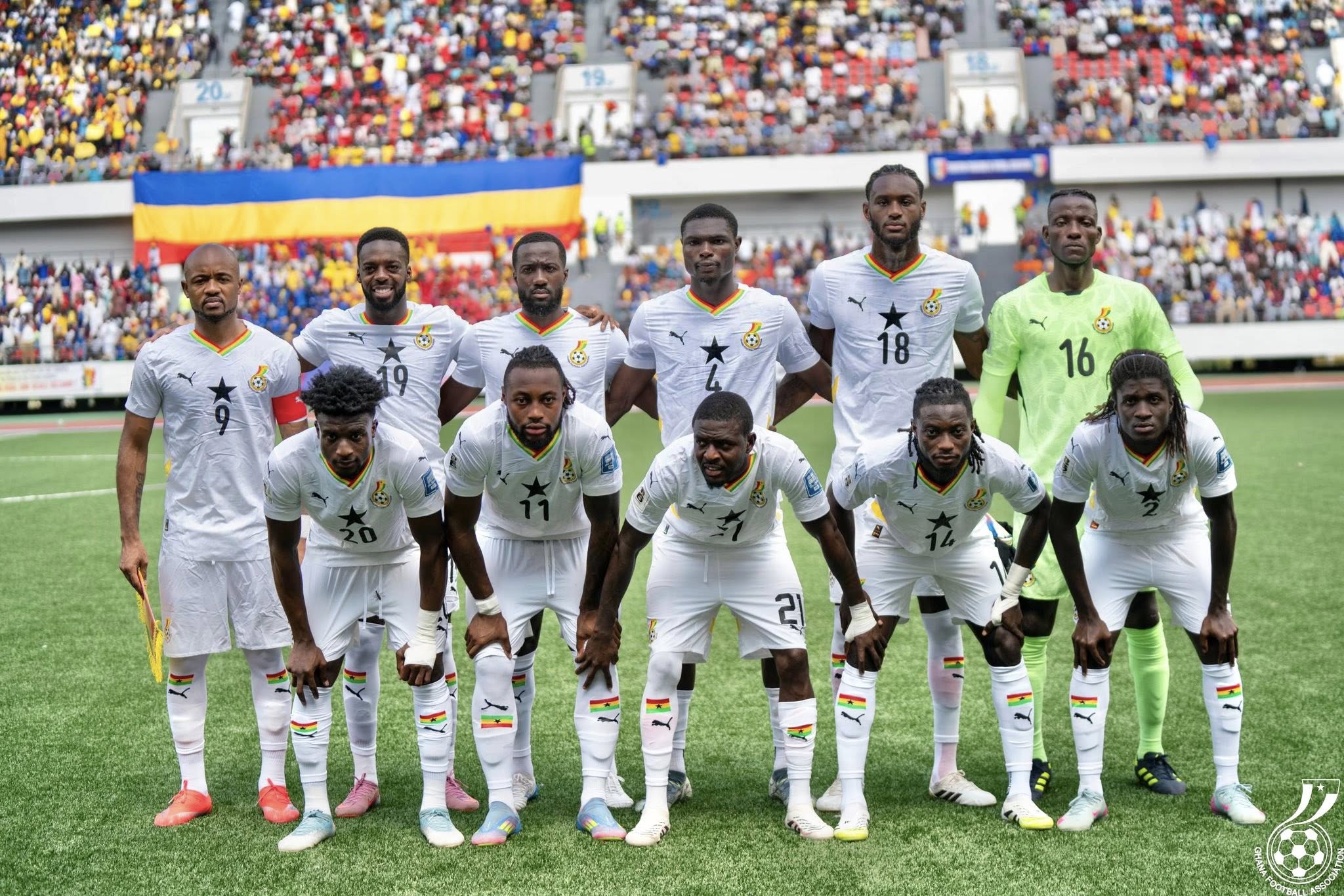
The most significant structural problem facing the Black Stars lies in the centre of the pitch. Thomas Partey remains the one midfielder who can be relied upon to perform consistently at the highest level. However, football is not played by individuals alone, and finding a suitable partner for him in the double pivot has proven extraordinarily difficult.
The number six and eight positions have become areas of chronic instability. Kwasi Sibo has been given opportunities but is yet to demonstrate that he can anchor the midfield at international level. Elisha Owusu and Abdul Salis Samed have similarly failed to make the position their own, with performances that have ranged from unconvincing to underwhelming.
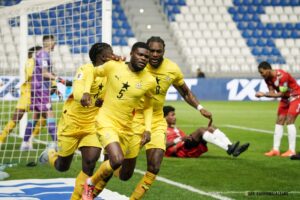
This is not merely a matter of fine-tuning, it represents a fundamental recruitment challenge. If Ghana is to make any meaningful impact at the World Cup, the midfield must be rebuilt around a clear understanding of roles and responsibilities. The partnership with Partey cannot be a revolving door of experimentation; it must be identified, developed, and cemented through consistent selection.
The attacking midfield positions are relatively well-stocked, which makes the failure to address the deeper roles all the more frustrating. The upcoming friendlies must be used to give extended minutes to potential candidates, with a view to identifying a settled partnership that can provide the platform for the team’s attacking talents to flourish.
The Striker Question: Who Backs Up Jordan Ayew?
Jordan Ayew has, through consistent performances and undeniable commitment, established himself as the first-choice striker for the Black Stars.
His work rate, intelligent movement, and ability to link play make him invaluable to the team’s structure. However, the question of who replaces him in his absence remains disturbingly unanswered.
Brandon Thomas Asante has emerged as a fan favourite, with many observers drawing comparisons between his physical profile and playing style and that of legendary former captain Asamoah Gyan. His form at Coventry City has been encouraging, suggesting he possesses the natural instincts of a number nine. However, his opportunities with the Black Stars have been limited to brief cameos, making it impossible to judge whether he can replicate his club form at international level.
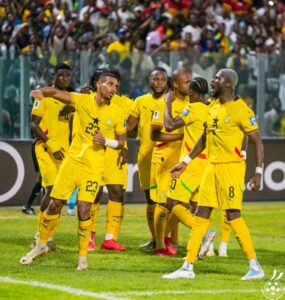
The calls for Thomas Asante to be given extended minutes are growing louder, and they carry logic. If he is to be considered a genuine deputy to Ayew, he must be trusted with meaningful game time in the friendlies. The technical team must determine whether he can lead the line effectively when called upon, or whether alternative solutions must be sought.
Adu Poku and Inaki Williams have both been tried in the central role, with mixed results. Williams, in particular, has struggled to replicate his Athletic Bilbao form when deployed as a central striker for Ghana, raising questions about whether his best position for the national team might lie elsewhere.
The Stakes for Otto Addo
Missing the Africa Cup of Nations has placed Otto Addo in a difficult position. The tournament would have provided invaluable competitive minutes for his squad, allowing him to test combinations under pressure and build cohesion ahead of the World Cup.
Without that preparation, he must rely entirely on the upcoming international friendlies to assess his options and make final decisions.
The friendlies against Germany, Austria, and Mexico represent his only opportunities to experiment before the World Cup.
These are not merely warm-up matches, they are the final examinations for players hoping to make the squad, and the last chance for Addo to solve the puzzles that have plagued the team.
Failure to address the right-back situation, the midfield partnership, and the striking backup would leave Ghana vulnerable at the World Cup. The deficiencies that prevented qualification for the Africa Cup of Nations will not disappear on the global stage; they will be exposed and exploited by superior opposition.
The coming months will determine whether the Black Stars arrive at the World Cup as a team ready to compete, or as a collection of talented individuals still searching for solutions to problems that should have been resolved long ago. For Otto Addo, the stakes could not be higher.