

In the space of just a few days, Ghana football has been thrust into a period of reflection, uncertainty, and urgent decision-making. What began as routine international preparations has quickly evolved into a defining moment for the future of the game, both at the national and domestic levels.
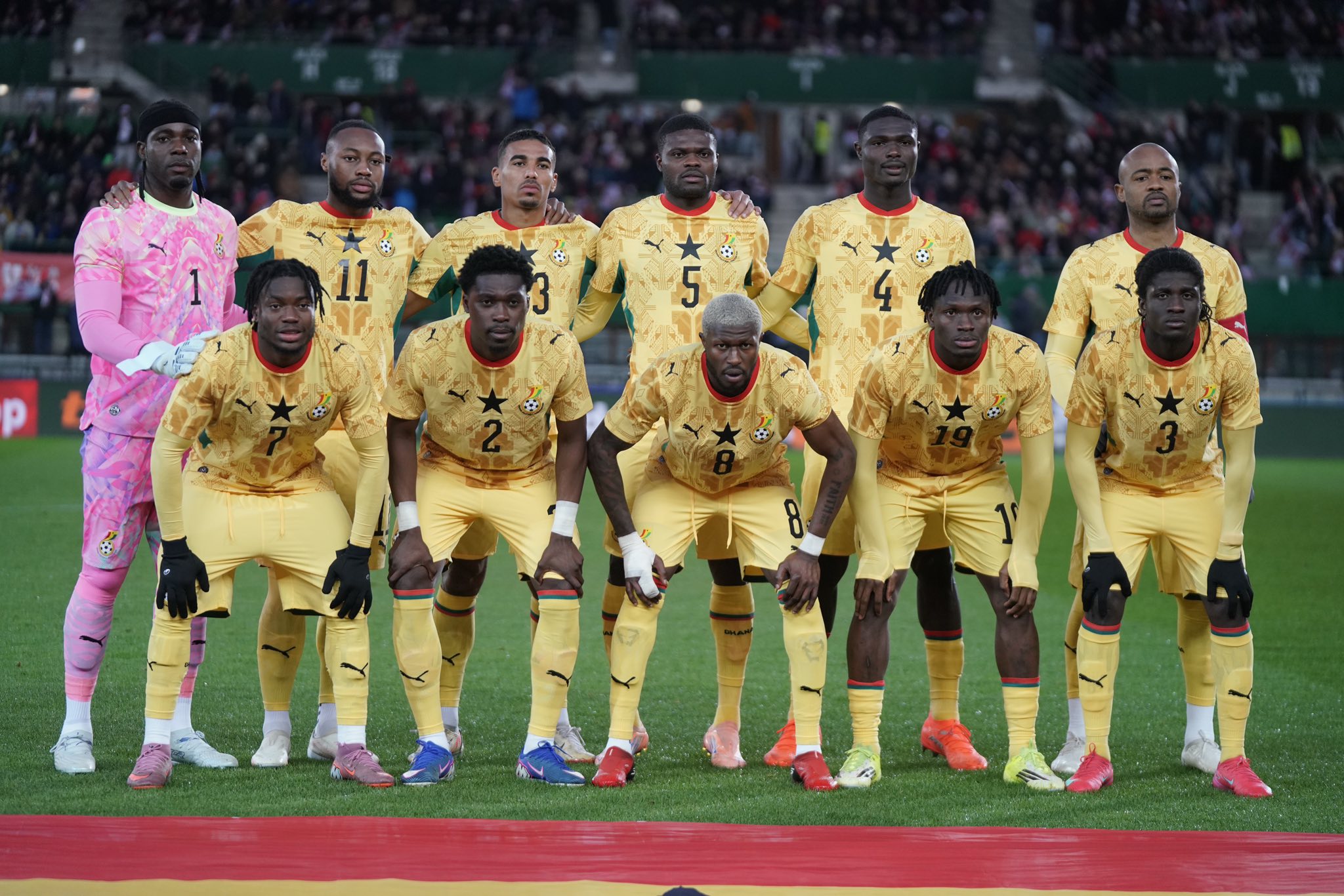
The Black Stars of Ghana played high-profile international friendlies against Austria and Germany, part of their build-up to the 2026 FIFA World Cup to be hosted in North America. While results in such matches are often secondary to performance and experimentation, what stood out was not just defeat, but the team’s visible lack of cohesion, philosophy, structure, and a clearly defined playing identity.
The reaction from authorities was swift and decisive. Head coach Otto Addo was relieved of his duties, a move that, despite questions over its timing, received considerable public backing. For the Fans, it was an inevitable decision, one driven by growing concerns over lack of progression, lack of commitment, poor performance and inconsistency within the team.
Yet, while the sacking of Addo has dominated headlines, it has also shifted attention toward a more pressing issue, rebuilding. The FA now faces the critical responsibility of appointing a new head coach capable not only of delivering results, but of restoring belief, identity, improve performance, progression and long-term direction to the Black Stars.
However, even as that conversation gained traction, another development sent ripples through the football fraternity. Hohoe United’s decision to withdraw from the Ghana Premier League, citing concerns over officiating and alleged systemic bias has raised alarm, questions beyond the confines of club football. It is a move that affirms deeper structural challenges within Ghana football, the inability to attract corporate sponsors, and threatens to stall progress in a country that produced a three time African footballer of the year, Abedi Pele, and African Top scorer at the World Cup, Asamoah Gyan.
For the Volta Region, the rise of Hohoe United, alongside the resurgence of Heart of Lions and increased representation in the Division One League, had marked an important step in Ghana football in recent years. The club’s withdrawal, therefore, speaks ill of the rot in the league, corruption in the league, poor and unfair officiating in the GPL which risks undoing years of growth and investment made by Club owners over the years.
While the grievances raised may resonate with broader concerns about officiating standards and governance, the decision to withdraw appears, at best, premature and emotional. Ghana’s football history is full of clubs that have faced serious difficulties, like financial problems, poor performance, mismanagement, or even relegation but instead of collapsing, they managed to recover and become successful again by staying strong (resilience) and making positive changes (reform).
The hope remains that Hohoe United’s leadership will reassess their position in the interest of their supporters and the long-term health of the game in the region.
Amid these unfolding developments, attention inevitably returns to the Black Stars and the deeper issues that have plagued the team over the last couple of years. Ghana’s most successful era at the World Cup, particularly the 2006 and 2010 FIFA World Cup campaigns was built on a foundation of continuity, strong team identity, and a healthy integration of quality players from the GPL. Players developed through local leagues and national youth teams that formed the core and combined skill with unity, cohesion and pride of wearing the national team jersey.
Today, that foundation appears less visible. The current squad is largely composed of players developed abroad, many of whom possess undeniable individual quality, yet often struggle to replicate that form and commitment in national team jersey. The intangible elements that once defined the Black Stars, that is passion, cultural identity, unity, and a deep emotional connection to the jersey is missing. Now the current players play without any dedication, commitment, passion and what it’s means to play for the national team.
Legends such as Stephen Appiah, Michael Essien, Asamoah Gyan, and Sulley Muntari exemplified a generation where playing for Ghana that moved to professional duty. It was a calling defined by sacrifice, leadership, and an unyielding sense of responsibility. That spirit, many argue, is what the current team must rediscover.
This reality points to the need for a deliberate and strategic policy shift. Integrating a meaningful percentage of home-based players into the national team, potentially targeting at least 20% representation, could help restore a sense of identity while strengthening the domestic league. Such an approach would not only enhance team cohesion but also create a clearer developmental pathway for emerging talent within Ghana.
Beyond patriotism, the benefits are tangible. Increased national team representation for local players would boost the visibility and competitiveness of the Ghana Premier League, inspire young footballers, and contribute to the financial sustainability of clubs. FIFA’s compensation mechanisms for player release during major tournaments present an added incentive, one that Ghanaian clubs could better leverage with increased domestic player participation.
There is also a strategic dimension to consider. Tournament squads inevitably include players who see limited or no playing time. Prioritizing home-based players in these fringe roles could serve as both an investment in the domestic game and a step toward long-term squad development.
As the search for a new head coach intensifies, the Ghana Football Association must look beyond immediate results. This is not merely about filling a vacancy, it is about defining a philosophy as it is in our football DNA book launched by the FA.
The next coach must align with a broader national vision that emphasizes identity, continuity, and the integration of local talent into the national team.
Notably, prior to the 2024 general elections, former President John Dramani Mahama advocated for a renewed focus on home-grown players. In the current context, such proposals appear increasingly relevant, offering a potential blueprint for reform as Ghana prepares for the challenges ahead.
Ultimately, Ghana football stands at a crossroads. The challenges facing the Black Stars and the domestic league are deeply interconnected, requiring solutions that are bold, deliberate, and forward-looking. Reactive decisions alone will not suffice.
This moment calls for a reset, as championed by the NDC Government, one rooted in reflection, strategy, and national purpose. If approached with clarity and commitment, it presents an opportunity to rebuild not just a team, but an entire footballing identity.
Only then can the Black Stars rise again, stronger, more unified, and truly reflective of the country they represent.