


An analysis of Liam Rosenior’s tenure at RC Strasbourg reveals a manager defined by tactical flexibility and a clear foundational philosophy. While demonstrating a willingness to adapt his shape, Rosenior’s preferences lean towards structured, possession-oriented systems that prioritise organisational balance.
Primary Formations
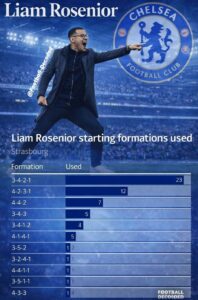
The data clearly indicates Rosenior’s favoured setup:
3-4-2-1: Used 23 times
4-2-3-1: Used 12 times
4-4-2: Used 7 times
3-4-3: Used 5 times
4-1-4-1: Used 5 times
This list shows a consistent reliance on either a back three or a double-pivot midfield as the core of his teams. Beyond these primary systems, Rosenior also experimented with several other formations, including the 3-4-1-2, 3-5-2, 4-4-1-1, and 4-3-3, each on a more occasional basis.
Interpreting the Tactical Approach
The frequent use of the 3-4-2-1 formation underscores Rosenior’s commitment to a solid defensive structure with wing-backs providing width, and dual attacking midfielders supporting a central striker. This system is inherently designed for controlled build-up and positional play.
His regular shifts to the 4-2-3-1 and 4-4-2 further prove he is not wedded to a single formation. Instead, he adapts his strategy to the players available and the demands of specific opponents. The common thread across all his most-used systems is a focus on midfield stability and controlled possession.
A Philosophy of Control and Balance
Liam Rosenior’s time at Strasbourg paints a picture of a modern, adaptable coach. While his 3-4-2-1 formation was the clear cornerstone of his approach, his willingness to utilise over ten different starting shapes highlights a pragmatic and flexible mindset.
Ultimately, his tactics are built upon the principles of structural discipline, midfield control, and organised build-up play. This commitment to a balanced, possession-focused philosophy aligns with the long-term footballing values held by many top clubs, making him a manager with a clear and adaptable tactical identity.