

CAF Changed the Result, The Bookmakers Cleaned Up the Mess: How the AFCON 2025 Forfeit Ruling Exposed CAF’s Failure to Recognise Sports
Betting as a Core Football Stakeholder
By James Pobee
A forwarded CAF media statement landed in a group chat at 22:22 — carrying news that Senegal had been declared to have forfeited the AFCON 2025 Final, with the result recorded as 3-0 to Morocco. The reaction was instant.
“Are betting companies going to revert and award winners?” — 22:22. “Hahaha” — 23:00. “The jokers at CAF will take care of that perhaps” — 23:02. Five rolling-on-the-floor laughing emojis— 23:06.
That brief, sarcastic exchange contains more institutional insight than most formal commentary published in the days that followed.
The person asking was not being frivolous — they were identifying, in plain language, a major stakeholder CAF’s ruling had completely ignored: the sports betting ecosystem. The laughter was not really about betting. It was the sound of people who already knew CAF would not take care of it.
What CAF Decided — And What It Ignored
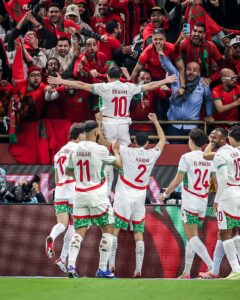
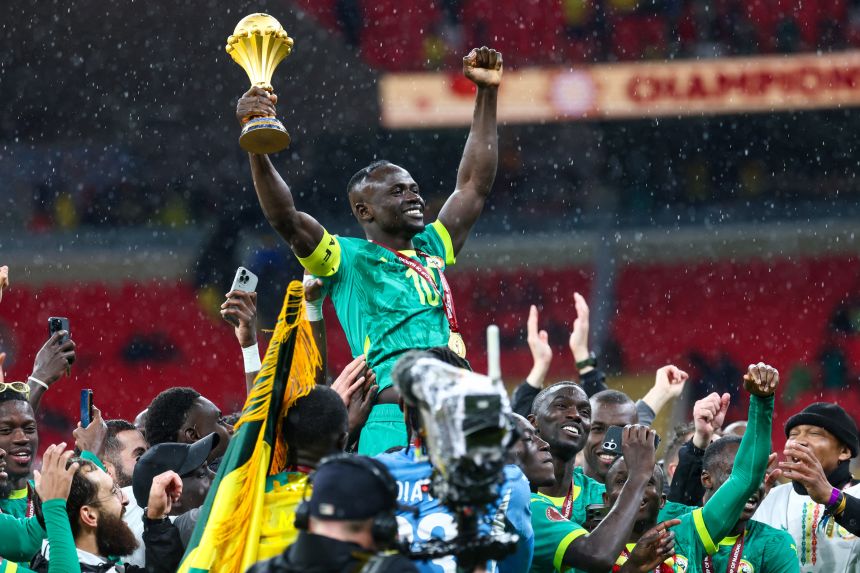
On January 18 in Rabat, Senegal initially triumphed 1-0 in a turbulent AFCON 2025 final. The CAF Appeals Committee has since overturned the result, awarding Morocco a 3-0 administrative victory due to Senegal’s forfeiture. The trigger was a chaotic late sequence in which several
Senegalese players temporarily left the pitch, supporters attempted a pitch invasion, and objects were thrown onto the field. After Brahim Diaz missed the resulting penalty, Senegal won in extra time.
Two months later, CAF invoked Articles 82 and 84 of the AFCON Regulations and handed Morocco the title administratively. The live result, extra time, celebrations — all rendered null and void. CAF’s ruling addressed regulations, procedures, fines, and codes at considerable length.
What it did not address — not once — was the commercial betting ecosystem that had already settled, paid out, and closed the books on that final weeks prior.
The WhatsApp chat raised that question at 22:22. CAF never did.
Sports Betting Is a Core Football Stakeholder
The sports betting industry is not peripheral to football. It is central to it. Across Ghana, Nigeria, Kenya, Senegal, and the wider continent, betting is woven into the everyday fabric of football fandom. Globally it generates hundreds of billions of dollars annually — with football at its core.
Betting companies sponsor clubs, contribute to broadcasting ecosystems, employ thousands, and serve millions of fans as active customers. They are, by every meaningful measure, major stakeholders — with real obligations to customers, regulatory duties to governments, and legitimate interests in the integrity of results.
When CAF changes a result two months after the fact, it does not merely rewrite sporting history.
It destabilises a commercial ecosystem built on one foundational principle: a result, once played and confirmed, is final. CAF shattered that principle without a single word of guidance to the industry it affected.
The Bookmakers Did What CAF Would Not — And Paid thePrice
Into the vacuum CAF created, stepped the betting companies. Paddy Power confirmed payouts on Morocco to win. Sky Bet paid out Morocco as outright winners. Betfair resettled outright bets on Morocco placed before the tournament according to Sky Sports.
These companies revisited settled accounts, reassessed liabilities, and made decisions worth potentially millions — all without warning, consultation, or any framework from CAF.
But here is the dimension nobody is talking about: the betting companies did not just absorb an administrative inconvenience. They absorbed a direct financial double loss.
When Senegal won on the night, punters who backed them were paid out — at full-time or via cashout during extra time. Morocco backers lost their stakes or cashed out at a loss to cut their exposure. Both groups made rational, good-faith decisions based on a result that stood for two months. CAF’s reversal has now left bookmakers paying out Morocco backers as the new official winners — while being unable to recover a penny of the payouts already made to Senegal backers.
Punters who cashed out backing Morocco at a loss receive nothing; their decision, made in real time during a live match, cannot be undone by a retrospective ruling. The companies are absorbing every cent of this — costs entirely created by CAF’s delayed, uncoordinated decision, without acknowledgement, warning, or a word of thanks.
This is not a minor operational inconvenience. It is a significant, quantifiable financial loss imposed on a major commercial stakeholder by an institution that did not consult them, did not warn them, and has said nothing to them since.
CAF’s appeal body also appears to have directly contradicted IFAB’s Rule 5.2, which states that the referee’s decisions regarding the result of a match are final — yet no explanation was given as to why officials failed to apply the regulations on the night. That contradiction is not just a legal curiosity. It is an integrity failure — and integrity in sport is the very bedrock on which sports betting is regulated and licenced. A governing body that changes results months later without framework or consultation is a systemic integrity risk for the entire regulated betting industry.
What CAF Must Now Do
The Senegalese Football Federation has announced it will appeal to the Court of Arbitration for Sport in Lausanne according to ESPN — a process likely taking the better part of a year, extending uncertainty across the entire ecosystem. African football expert Mimi Fawaz noted that this ruling has, in many fans’ eyes, placed a stain on the continent’s flagship tournament at precisely the moment African football was demanding greater global respect.
That respect cannot be demanded while ignoring the stakeholders sustaining football’s commercial lifeblood. CAF must urgently: acknowledge betting operators as formal stakeholders in any process that could alter a match result; establish clear policy on post-match result amendments with defined timelines; coordinate with African betting regulators for consistent responses across markets; and recognise that match integrity and commercial integrity are inseparable. You cannot protect one while destabilising the other.
Conclusion
CAF issued a ruling and walked away. The betting companies — Paddy Power, Sky Bet, Betfair, and others — stepped in, paid out, and absorbed losses they never created. The ruling to strip Senegal of their AFCON title two months after the final is unprecedented— and its most enduring lesson may have nothing to do with football regulations. It is simply this: your decisions do not end when your press release does.
CAF issued a statement. The bookmakers issued payouts and swallowed losses. Only one of those parties actually took care of anything.
And the fans — laughing into five rolling emojis at 23:06 — already knew which one it would be.