

The world of football was thrown into a state of uncertainty on Saturday as global governing body FIFA confirmed it is closely monitoring the situation in Iran following the outbreak of major military conflict with World Cup co-host the United States.
Just four months before the 2026 FIFA World Cup is due to kick off across North America, Iran’s participation in the tournament is now in question after the US and Israel launched joint military strikes on Iranian territory overnight .
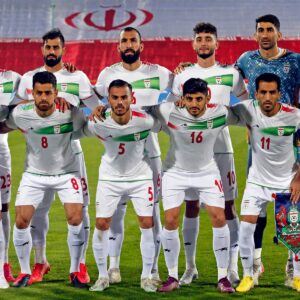
Iran, which qualified for the tournament through the Asian Football Confederation, is scheduled to play all three of its Group G matches on American soil. According to the official schedule, Team Melli is set to face New Zealand on June 16 in Los Angeles, Belgium on June 21, also in Los Angeles, and Egypt on June 27 in Seattle .
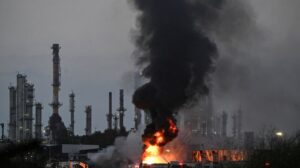
However, those plans are now in doubt following an escalation in the Middle East. The US and Israel launched strikes on Iran overnight, with President Donald Trump describing the campaign as “massive and ongoing” and calling for regime change in Tehran . Iran has since retaliated, launching strikes toward US targets and allies across the region, including in the United Arab Emirates, Bahrain, and Qatar .
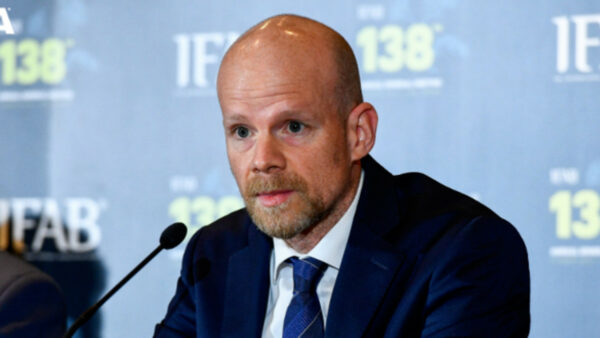
FIFA Secretary General Mattias Grafstrom addressed the crisis on Saturday while attending the International Football Association Board’s Annual General Meeting in Cardiff, Wales.
“I read the news this morning the same way you did,” Grafstrom told reporters. “We had a meeting today and it is premature to comment in detail, but we will monitor developments around all issues around the world” .
When pressed on whether FIFA could guarantee the safety of the Iranian team and its fans traveling to the United States, Grafstrom pointed to the successful draw held in Washington D.C. last year, in which all qualified nations participated.
“We had the finals draw in Washington in which all teams participated, and our focus is on a safe World Cup with all the teams participating,” he said. “We will continue to communicate as we always do with three [host] governments as we always do in any case. Everybody will be safe” .

The diplomatic situation is particularly sensitive given the tournament structure. Iran, a nation of nearly 90 million people with a passionate football culture, qualified for its fourth consecutive World Cup based purely on sporting merit . The team had been looking forward to a rare advantage, playing two of its three group games in Los Angeles, home to one of the largest Iranian diaspora communities in the world, sometimes nicknamed “Tehrangeles” .
But the political backdrop has shifted dramatically. Just weeks ago, Iran boycotted the World Cup finals draw in Washington after the United States refused to grant visas to several members of the Iranian delegation, including federation president Mehdi Taj Now, with active hostilities underway, the situation has become far more grave.
For FIFA, the scenario presents an unprecedented challenge. The governing body prides itself on keeping politics separate from sport, but it is now faced with a situation where one host nation is actively at war with a participating team.
The conflict marks an escalation after months of deteriorating diplomatic efforts between Tehran and Washington. The strikes followed failed talks to constrain Iran’s nuclear program in exchange for sanctions relief. Experts have warned that military action will only harden Iran’s resolve and could prompt further retaliation .
Should Iran withdraw or be unable to participate, FIFA would face difficult questions about how to replace them. Options could include promoting the next highest-ranked team that failed to qualify, though such a move would likely cause controversy so close to the tournament .
Any change would also ripple through the tournament structure, affecting Group G opponents Belgium, New Zealand, and Egypt.
Belgium’s foreign minister Maxime Prevot has already weighed in on the crisis, stating that his country “deeply regret(s) that diplomatic efforts could not lead earlier to a negotiated solution” .
Grafstrom emphasized that all teams participated in the draw and that FIFA’s focus remains on safety. But with flights in and out of Dubai suspended and explosions reported across the Gulf region, the path to a peaceful World Cup in the United States looks increasingly complicated .
FIFA has stated it will continue to communicate with the governments of the three host nations, United States, Canada, and Mexico as it navigates this crisis. The coming days will be critical in determining whether Iran will take its place on football’s biggest stage, or whether the 2026 World Cup will lose one of Asia’s most consistent representatives before a ball is even kicked.