

Is Indiscipline the Bane of Chelsea’s Season?
For a club with the ambition and resources of Chelsea FC, the 2025/26 Premier League campaign has been one of promise repeatedly undermined by self-inflicted wounds.
The Blues have accumulated a league-high six red cards this season, at least two more than any other side in the competition. In a league that demands consistency, composure, and control, such a disciplinary record has proven costly.
At this rate, Chelsea could match and or surpass Queens Park Rangers and Sunderland’s record of most red cards in a single PL season (9).
A Pattern of Self-Sabotage
Chelsea’s red cards have not come in dead rubbers or already-lost causes. They have arrived in moments where the West Londoners were either in control or well-positioned to secure maximum points.
Robert Sanchez saw red inside five minutes against Manchester United, a turning point in a 2-1 defeat. Ironically, when United were reduced to ten men later in the match, Chelsea looked the superior side, a reminder of what might have been had they kept parity in numbers.
Against Brighton & Hove Albion, Chelsea led and restricted the Seagulls to no shots on target before Trevoh Chalobah was dismissed for denying a clear goal-scoring opportunity. The momentum flipped, and Brighton capitalised to win 3-1.
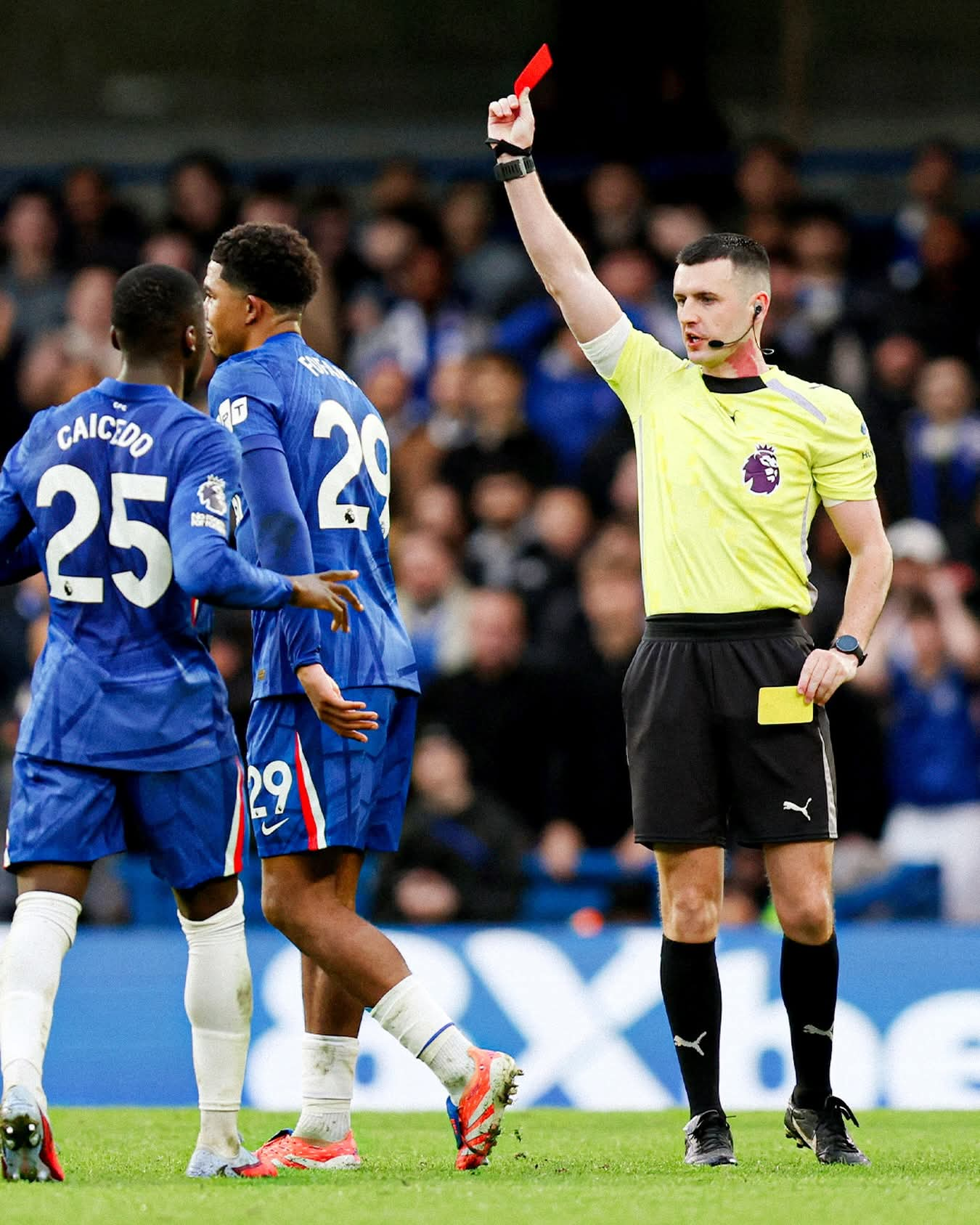
Moises Caicedo’s rash tackle on Martin Zubimendi versus Arsenal left Chelsea a man down in the first half. Despite the setback, they held the league leaders to a 1-1 draw, again raising the question: with eleven men, could it have been three points?

Marc Cucurella was sent off in a narrow 2-1 defeat to Fulham FC, where Chelsea battled bravely but succumbed late. The Spanish left back was sent off in the first half and the Cottagers took advantage.
Most recently, Wesley Fofana’s dismissal against Burnley cost them dearly. Leading 1-0 with 15 minutes to play, the Blues conceded late and dropped two valuable points.
Add to that earlier disciplinary issues involving Malo Gusto, and a worrying pattern emerges.
The Cost in Numbers
Chelsea currently sit fifth with 45 points. In the matches heavily influenced by red cards, they have dropped 13 points from winning or commanding positions.
Had they preserved discipline and converted those scenarios into victories, the Blues would be on 58 points—just three behind leaders Arsenal on 61 and firmly in the title conversation.
Instead, they are battling for a Champions League place, three points behind Manchester United and level with Liverpool in sixth.
Beyond the Red Cards
Indiscipline tells only part of the story. Chelsea have also struggled to “kill games off,” frequently allowing opponents back into contests they appeared to control.
The inability to manage matches both emotionally and tactically has prevented them from converting dominance into decisive wins.
Title-winning sides are defined not only by talent but by game management. They know when to press and when to pause, when to tackle and when to contain. Chelsea’s youthful exuberance and aggression have at times crossed into recklessness.
Genuine Contenders or Nearly Men?
The underlying performances suggest Chelsea possess the quality to compete. Their ability to go toe-to-toe with Arsenal even with ten men, or dominate Brighton before the red card, indicates a side capable of challenging at the top.
But football at the highest level is unforgiving. Margins are slim, and discipline is non-negotiable. Six red cards in a title race is not just a statistic but it is a recurring handicap.
The debate, therefore, is legitimate: without the indiscipline, Chelsea could well have been genuine contenders. Instead, their focus has shifted from chasing the title to securing a top-four finish.
In a season defined by “what ifs,” Chelsea’s biggest opponent may not have been their rivals but themselves.