

Seven African Referees Selected for 2026 FIFA World Cup Duty
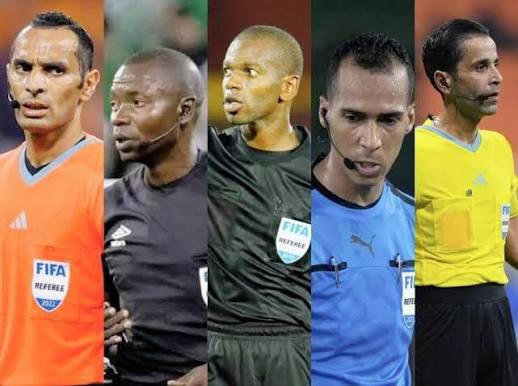
Seven referees from across Africa have been selected to officiate at the upcoming 2026 FIFA World Cup in the USA, Canada and Mexico, highlighting the continent’s growing credibility in global football officiating.
The Confederation of African Football (CAF) will be represented by officials from Algeria, Egypt, Gabon, Morocco, Mauritania, South Africa, and Somalia.
The selected referees are Mustapha Ghorbal (Algeria), Amin Mohamed (Egypt), Pierre Atcho (Gabon), Jalal Jayed (Morocco), Dahane Beida (Mauritania), Tom Abongile (South Africa), and Omar Artan Somalia).
Mustapha Ghorbal: Experience Meets Opportunity
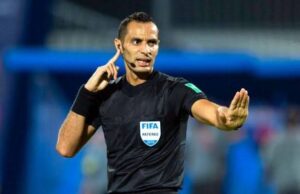
Mustapha Ghorbal leads the group as the most experienced, having officiated at both the 2018 and 2022 World Cups.
He was in charge when Netherlands beat Ecuador at the 2022 FIFA World Cup in Qatar as well handling the group stage fixture between Denmark and Australia.
His consistent performances at elite competitions have established him as one of Africa’s most reliable referees, and he is expected to handle high-profile matches once again.
In contrast, several of the others will be making their World Cup debuts. Somalia’s Omar Artan stands out among the newcomers, with his selection marking a significant milestone for a nation rarely represented at this level.
The likes of Pierre Atcho, Jalal Jayed, Dahane Beida, Tom Abongile, and Amin Mohamed will also be aiming to prove themselves on the biggest stage.
Representation and Rising Expectations
The seven appointments reflect strong continuity, even if slightly below the eight referees selected for the FIFA World Cup 2022. That edition was particularly significant, featuring record African representation and broader involvement in VAR roles.
It also delivered a historic moment through Salima Mukansanga, who became the first African woman to officiate as a center referee at a World Cup, setting a benchmark for inclusivity and progress.
The expansion of the 2026 tournament to 48 teams has created more opportunities for referees globally, including those from Africa.
However, the slight drop in numbers compared to 2022 raises a valid question about whether Africa is fully maximizing its growing pool of officiating talent.
For the selected referees, the World Cup represents both recognition and pressure.
Every decision will be scrutinized globally, leaving little margin for error. Their performances will not only define their individual reputations but also shape perceptions of African refereeing on the world stage.