

Should Andre Ayew Be on Ghana’s World Cup Bus?
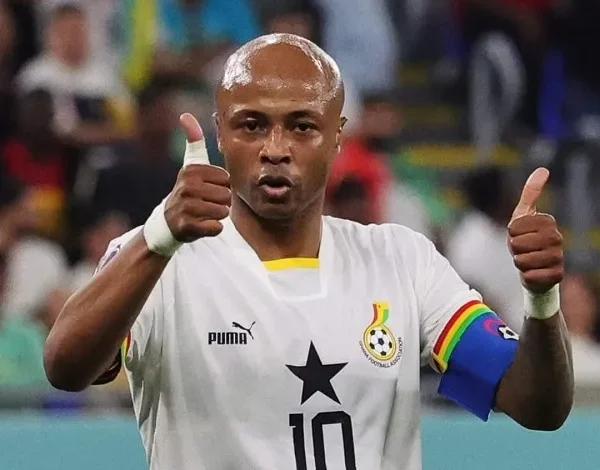
Few names in Ghanaian football command as much respect and longevity as Andre Ayew. Nearly two decades after making his debut for the Ghana national team in a friendly against Senegal in 2007, the veteran forward is still active at club level and has not entirely closed the door on international football.
At 36, Ayew’s possible return to the Black Stars has sparked debate among fans, pundits, and former players ahead of the next FIFA World Cup in the US, Mexico and Canada.
The question that lingers is should Ghana rely on experience once again, or continue building a younger squad under head coach Otto Addo?
Ayew’s international career is one of the most decorated in Ghana’s history. The former Black Stars captain has featured in eight Africa Cup of Nations tournaments and three World Cups, establishing himself as one of the most consistent players of his generation.
He is Ghana’s most capped player and shares the record for the most appearances at the AFCON finals with Cameroonian legend Rigobert Song. Across multiple generations of the Black Stars, Ayew has remained a central figure thanks to his leadership, work ethic, and knack for scoring crucial goals.
However, international football rarely waits for sentiment.
Ayew has not been called up since the 2024 AFCON in Côte d’Ivoire. Following his return to the national team setup for a second spell as the head coach, Otto Addo made it clear that he intended to move forward without the veteran forward, focusing instead on building a younger and more dynamic squad.
For a period, Ayew’s absence from the team coincided with uncertainty at club level after leaving Le Havre. That situation further weakened his case for a recall.
But the narrative has slightly shifted since his move to NAC Breda in the Netherlands, where he has regained regular playing time and even found the back of the net. For some observers, his return to playing has reopened the conversation about whether his experience could still benefit the national team.
The Age Debate
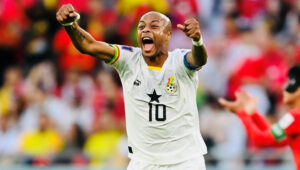
Age is often the central argument against Ayew’s return. At 36, many believe the time has come for him to step aside and allow younger players to take over.
Yet football history offers several examples of elite players performing well into their late 30s and even early 40s. Players like Cristiano Ronaldo (41), Luka Modrić (40), and Lionel Messi (38) have all continued to represent their national teams deep into the latter stages of their careers.
While Ayew may not be operating at the same global level as those icons, supporters of his recall argue that experience, leadership, and tournament know-how are invaluable assets at major competitions.
Minister for Sports and Recreation, Hon. Kofi Adams recently added his voice saying that Ayew can return to the team if he plays well and the technical team deem it fit to invite him again.
The debate has also been fueled by comments from Ayew’s younger brother, Jordan Ayew, who now captains the Black Stars. Jordan suggested that “no additions should be made to the current squad”, although he acknowledged that the final decision rests with coach Otto Addo.
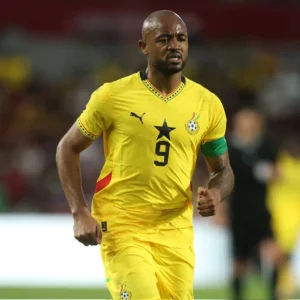
Some analysts interpret that comment as an indication that the team is moving on from its previous leadership core.
Meanwhile, some local pundits have taken a firm stance. Ghanaian coach and pundit Christopher Nimley has argued that Ayew “should be left out of the World Cup squad” entirely, insisting that Ghana must prioritize younger, hungrier players capable of building for the future.
Ghana’s Challenging World Cup Group
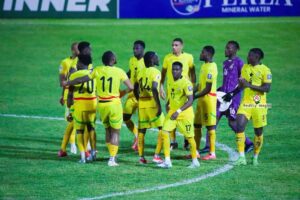
The Black Stars face a demanding task at the tournament. Drawn in Group L, Ghana will open their campaign against Panama before facing European heavyweights England and Croatia.
In such a competitive group, tournament experience could prove crucial. Ayew is one of the few Ghanaian players who have navigated multiple World Cups and AFCON tournaments, which strengthens the argument that he could still offer value—perhaps not as a starter, but as a squad leader and impact substitute.
Ultimately, the decision facing Otto Addo is about balancing experience and transition.
Ghana is clearly entering a new era, with younger players forming the core of the team. However, major tournaments often reward squads that combine youth with seasoned leaders who understand the pressures of the global stage.
Whether Ayew’s story with the Black Stars has already reached its conclusion or still has one final chapter remains to be seen. What is certain, however, is that few players in Ghana’s football history have left a legacy as enduring as Andre Ayew’s.