
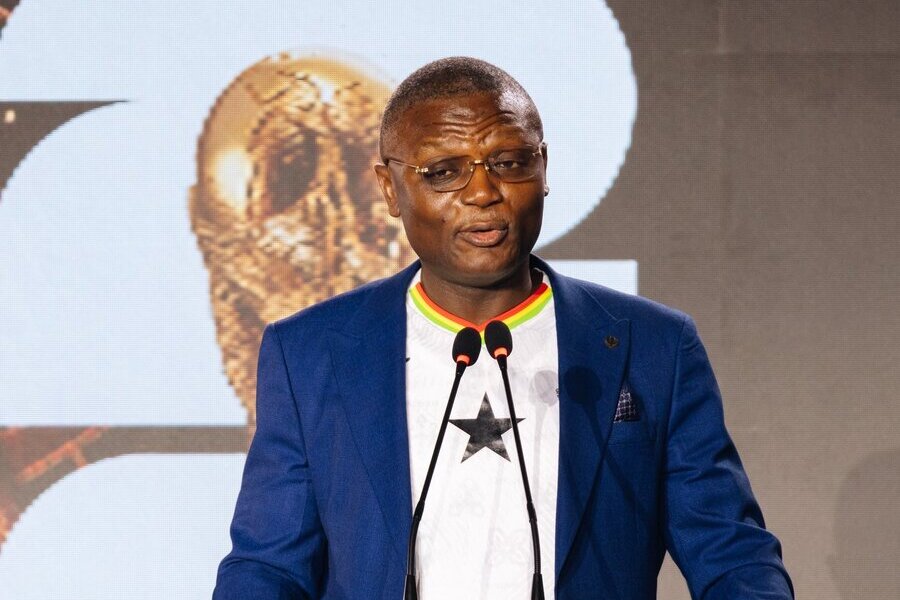
The Minister for Sports and Recreation, Hon. Kofi Iddie Adams, has issued a forceful call for the wholesale rebuilding of Ghana football’s development structures, telling delegates at the 32nd Ordinary Congress of the Ghana Football Association (GFA) that the country’s footballing assets are being squandered through inaction and short-termism.
Addressing Congress, the Minister acknowledged the depth of Ghana’s football heritage, its talented players, passionate supporters, and the enduring strength of its clubs. But he warned that these assets are not being harnessed or developed to their potential, arguing that the moment calls for a genuine rebuild rather than piecemeal interventions.
We must accept that Ghana football requires rebuilding. Not cosmetic changes or scattered programs, but a deliberate reconstruction of our development pathway.”
Central to the Minister’s address was a pointed concern over the declining pipeline of youth talent. He questioned whether the current system retains the capacity to identify and nurture successive generations of players, from grassroots and youth levels through to the senior national teams, describing the erosion of this pathway as one of the clearest signs that reform can no longer be delayed.
The Hon. Minister turned his attention to the country’s clubs, challenging them to look beyond the short-term economics of player sales and instead invest in building durable footballing institutions. He argued that sustainability depends on clubs actively developing a broader base of assets.
Are we building teams or building institutions? Clubs must develop assets ,supporters, brand equity, academies, facilities, digital audiences, and community relationships.”
Scrutiny of Government Investment
Hon. Adams also subjected recent government support to clubs to direct scrutiny, referencing the disbursement of one million Ghana cedis to each Premier League club. He pressed delegates to consider what that investment had actually produced, whether commercial departments, supporter databases, or improved facilities, or whether it had simply propped up existing structures without driving change.
Without tangible transformation to show for such interventions, the Minister warned, government support risks becoming little more than recurring season-to-season financing rather than a genuine investment in the game’s future.
The address also addressed fan engagement and stadium safety directly, with Hon. Kofi Adams citing the tragic death of supporter Nana Pooley at Nsoatre as a sobering reminder of the stakes involved in matchday security and responsible administration.
Supporters do not owe football their attendance; football must earn their trust.”
Looking to the international stage, Hon. Adams stressed that the strength of the Black Stars and Black Queens depends on the health of the domestic system that produces their players.
He called for ambition on the international front to be matched by sustained investment in girls’ football, coaching development, and structured player pathways at home.
The Minister left Congress with a series of questions he urged every stakeholder in Ghana football to sit with in the months ahead: what is being built, who is being developed, what value is being created for supporters, what did last season’s investments actually achieve, and how different will Ghana football look in five years’ time.