

A Team Without a System or a System Without a Team: The System of Selection! PART 3
Stor By: Nana Agyemang
The Analytical & Data-Driven Model
This modern philosophy, seen in the work of Roberto De Zerbi, Olympique de Marseille (France) who also had a stint at Brighton & Hove Albion in the English Premier League, Julian Nagelsmann, Head coach of the Germany national team, who was appointed in 2023 extended his contract to lead Germany through the Euro 2024 and beyond.

Before that, Nagelsmann managed RB Leipzig and Bayern Munich, where he became known for tactical innovation and data-driven methodology. They merged intuition with measurable evidence. Selection here is supported by advanced analytics, expected goals, passing networks, recovery zones, and player load data. Decisions are guided by patterns and probabilities rather than perception. The human eye interprets momentum, but data validates performance. This creates an objective, transparent method of selection where the process is measurable, repeatable, and adaptable.
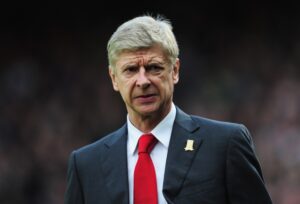
Arsène Wenger
The Developmental Continuity Model
Arsène Wenger, Marcelo Bielsa, and Erik ten Hag (during his Ajax tenure) are known for blending current form with future stability. Their model integrates youth development and long-term planning without compromising competitive readiness.
Selection under this philosophy is a balance between performance trends and potential ensuring players contribute immediately while evolving into key figures over time. It is a model built on continuity, cultural identity, and sustained squad harmony.
Arsène Wenger, in particular, championed the belief that youth is not a weakness but an investment in identity. He placed extraordinary faith in young players, seeing beyond their age to the intelligence, discipline, and technical fluency they could offer once molded within a consistent football culture. His approach transformed clubs like Arsenal into laboratories of growth, where emerging talents were shaped into professionals through trust, opportunity, and tactical education.
Training was treated as an extension of selection where every session is a test of attitude, discipline, and learning speed. Players earned their places daily through form and commitment, not name or history. This developmental vision, shared in spirit by Bielsa and believe it or not Ten Hag, fosters teams that regenerate naturally, retaining their core philosophy even as personnel change. It creates a living football organism one that grows, adapts, and sustains excellence across generations.
The Adaptive National-Team Model

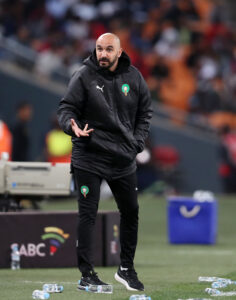
At international level, coaches such as Didier Deschamps, Gareth Southgate, and Walid Regragui apply the same core principle that underpins every elite system the primacy of current form, tactical cohesion, and collective balance. Unlike club managers, who work daily with their squads, national-team coaches must build chemistry in short, intense windows.
This demands precision in selection and clarity in purpose! Players are chosen not only for individual excellence but for how quickly they can translate club rhythm into national identity.
Selection, therefore, favors sharpness, familiarity, and adaptability. A player in peak club form carries tempo and confidence into the national environment, reducing the need for tactical reconditioning. Coaches like Deschamps prioritize collective stability over experimentation, selecting players who understand the rhythm of competition and the discipline of structure.
Southgate’s England used to emphasize adaptability and unity ensuring each player can integrate seamlessly into tactical variations without disrupting the system. Regragui’s Morocco, meanwhile, demonstrated at the 2022 World Cup how cohesion and current form can elevate a team beyond the sum of its parts.
Because international football lacks the luxury of long training cycles, every call-up must bring energy, professionalism, and immediate tactical understanding. The adaptive model thrives on continuity drawing strength from the players’ club sharpness while aligning them under a single national philosophy. In this sense, it is the ultimate test of football’s universal language: the ability of form, intelligence, and discipline to harmonize within limited time yet yield extraordinary results.
Why These Philosophies Converge
Across all football systems we have shown that one thing remains constant: form is the foundation. Whether through positional precision, pressing data or tactical rigidity, every elite model subscribes to the truth that selection is a science of balance. Coaches may differ in style or culture, but all recognise that football’s success depends on measurable human output; speed, endurance, anticipation, execution.
A single off-form player can distort pressing chains, break positional triangles or disrupt rhythm. Thus, selection becomes the act of maintaining equilibrium, blending logic and instinct, data and intuition, form and chemistry, to ensure every decision strengthens the whole. Football at its highest level is not merely played; these days it is engineered.

Ghana is preparing for the 2026 FIFA World Cup 2026 (Canada / USA / Mexico). The expectation is high. But from what we observe, the national side appears disjointed. The question therefore must be asked: What system does Coach Otto Addo now deploy?
What philosophy of selection underpins his choices, what metrics, what criteria are being applied?
How does the GFA ensure the foundation of form is real and measurable in every call-up?
What tactical identity is being built; has the team a clear dominant style (positional play, pressing, pragmatism, developmental continuity, etc)?
How are players evaluated for individual readiness and collective fit before inclusion?
With the World Cup looming, what steps are in place to ensure the squad is ready, connected, and cohesive?
Our call is for transparency: allow the public, the supporters, and the players themselves to understand the architecture of selection and the style of play. Without a clear philosophy, form becomes anecdotal, selection inconsistent, and identity blurred.
Ghana has the talent. Now we need the system, the process, the philosophy to match; so that when the world watches in 2026, we bring cohesion, strength and clarity, and not confusion.