
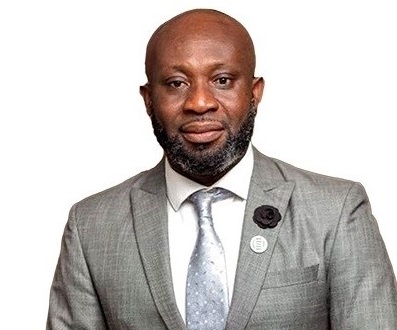
George Afriyie Questions Kurt Okraku Administration, Warns of ‘One-Man GFA’
Former Ghana Football Association (GFA) Vice President George Afriyie has launched a fresh attack on the Kurt Okraku-led administration, questioning the strength of the Association’s governance and warning against what he believes is an excessive concentration of power around the presidency.
Afriyie, who unsuccessfully challenged Okraku for the GFA presidency in 2019, made the comments during an appearance on SportyFM’s Sporty Breakfast, where he also raised concerns about the influence of the current GFA president and the effectiveness of the Executive Council.
“I sometimes think that what we have is a one-man GFA with no functional Executive Council.”
The remark represents his latest criticism of an administration with which he has remained publicly at odds since losing the 2019 presidential election.
Afriyie and Okraku faced each other in a fiercely contested election that followed the FIFA-led Normalisation Committee period.
Okraku secured 44 votes in the first round against Afriyie’s 40, before extending his advantage to 59-43 in the second round. Afriyie subsequently conceded defeat, allowing Okraku to be endorsed by 93 delegates in the final round.
The rivalry, however, dates back further. Afriyie was appointed GFA Vice President by then-president Kwesi Nyantakyi in 2015, having previously served in several football administrative roles, including work with Swedru All Blacks, Liberty Professionals and Ghana’s national teams.
He was also chairman of the Black Stars Management Committee before being removed from the position in April 2018.
Days later, the GFA announced that Afriyie had been relieved of his position as Vice President following an Executive Committee meeting. The decision came shortly after he publicly declared his intention to contest for the GFA presidency.
Accounts at the time pointed to a growing rift between Afriyie and Nyantakyi, although the GFA’s official announcement did not give a reason for his removal.
From the Nyantakyi Era to Normalisation
The dramatic fallout within the GFA occurred against the backdrop of the crisis that engulfed Ghana football in 2018. Nyantakyi resigned as GFA president in June that year after the Number 12 investigative documentary by journalist Anas Aremeyaw Anas generated allegations of corruption and misconduct.
FIFA had earlier provisionally suspended him for 90 days, while its Ethics Committee later imposed a lifetime ban after finding him guilty of breaches relating to conflicts of interest, bribery and commissions.
The crisis led to an extraordinary intervention. Following discussions between FIFA and the Ghanaian government, FIFA appointed a Normalisation Committee on August 27, 2018, to run the GFA’s daily affairs, review its statutes and organise fresh elections.
The committee was ultimately headed by Dr Kofi Amoah and remained in place until the electoral process that produced Okraku in 2019.
Afriyie himself was critical of the Normalisation Committee during its tenure, arguing at the time that Ghana had seen insufficient reform during its initial period. His political fortunes nevertheless changed during the 2019 election, when he emerged as Okraku’s principal challenger but fell short in the decisive vote.
Mixed Record and the Third-Term Question
Seven years into the Okraku presidency, Afriyie’s latest criticism comes as the administration approaches another major test.
The GFA Congress approved a constitutional amendment in August 2025 extending the presidential term limit from two to three four-year terms. The amendment means Okraku, whose second term ends in 2027, is eligible to seek a third mandate.
Okraku has not publicly declared his intention to seek another term, although speculation over a third-term bid has persisted. In 2025, he said it was premature to discuss his re-election plans despite the amendment.
“People are beginning to create a certain god. Kurt Okraku is being hailed in a certain manner and Ghana football will suffer for it.”
His assessment comes against a mixed competitive record under Okraku. The Black Stars qualified for the 2022 and 2026 FIFA World Cups but failed to progress beyond the last 16 at the Africa Cup of Nations during the period and missed the 2025 AFCON in Morocco altogether.
The women’s game has provided more encouraging signs. The Black Queens won bronze at the 2024 WAFCON and reached the quarter-finals of the 2026 edition before losing 2-1 to Malawi. They subsequently defeated Côte d’Ivoire in the WAFCON World Cup play-off route and remain in contention for a place at the 2027 FIFA Women’s World Cup.
With the question of Okraku’s succession looming and the GFA’s governance coming under renewed scrutiny, Afriyie’s critique ensures that the debate over Ghana football’s direction is unlikely to disappear quietly.