
The System is Broken: Ghana’s Sports Crisis Laid Bare
Ghana is not short of talent. It has never been the problem.
What the country is short of is the administrative will, the technical infrastructure and the plain financial commitment to turn that talent into winning machines.
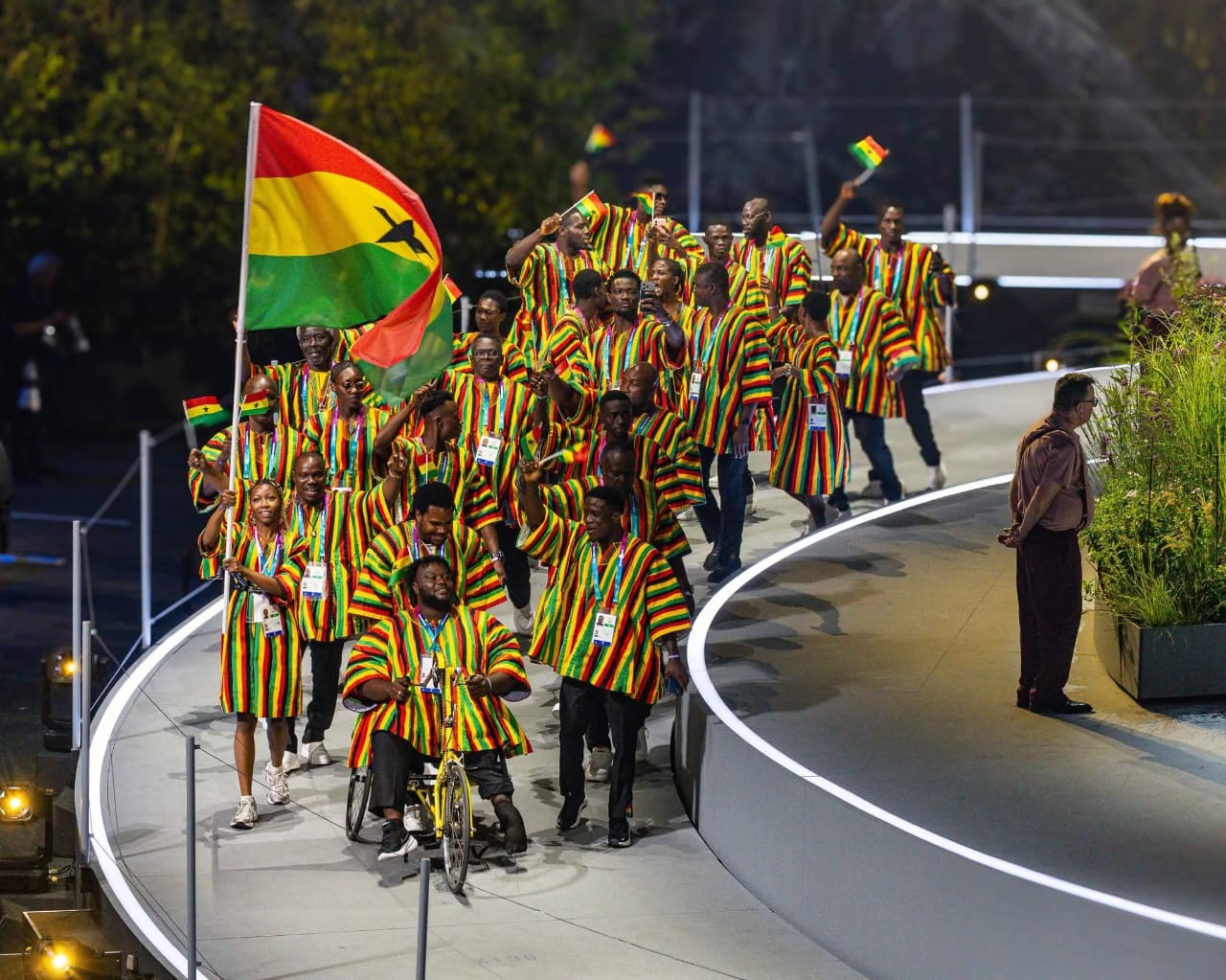
The Glasgow 2026 Commonwealth Games exposed that gap in the most public way possible, and the numbers alone tell a story administrators would rather not have told.
The Numbers That Should Worry Ghana
- Birmingham 2022: 5
- 0 Gold, 2 Silver, 3 Bronze
- Glasgow 2026: 2
- 0 Gold, 1 Silver, 1 Bronze
Ghana’s only medals in Glasgow came from Zinabu Issah (silver, Women’s Para Shot Put F57) and Amadu Mohammed (bronze, Men’s 55kg boxing).
Ghana sent ten boxers to Glasgow. Only one, Amadu Mohammed, brought home a medal.
That is not a talent problem. Talent does not explain a fall from five medals to two in a single cycle.
What explains it is a system that treats elite preparation as an afterthought and treats victory bonuses as a substitute for investment, a system that waits until the event year, makes extravagant promises to athletes it has starved of support for three years, and then wonders why Team Ghana failed to impress at the Games. How can you reap where you have not sown?
There are Problems Ghana needs to address. One is the he Finance Problem: Rewarding Victory, Refusing to Fund Preparation
National federations and the Ministry of Sports have, in successive years, failed to build the competitive capacity of the country’s athletes. Support does not arrive as a steady, multi-year investment in training, coaching and sports science.
It arrives, if it arrives at all, in the final months before a major Games, accompanied by promises of gold medal bonuses that assume a level of preparation the athlete was never given the resources to achieve.
No one has said this more plainly, or more recently, than Raphael Botsyo Nkegbe, a four-time Paralympian who has represented Ghana in wheelchair racing for more than two decades and competed in the Men’s 1500m T54 final at Glasgow 2026.
Speaking after his race, Nkegbe did not ask for a bigger winning bonus. He asked for the funding model to cushion athletes prepare and compete not participate in Global competition
“I’d prefer government invest $9,000 in my preparation and give me $1,000 if I win gold.” Raphael Botsyo Nkegbe, four-time Paralympian, after the Men’s 1500m T54 final, Glasgow 2026
That single sentence is the clearest indictment of Ghana’s sports funding model on record. Nkegbe has spent much of his 20-plus years representing the country financing his own specialised racing equipment.
He has, for long stretches of his career, worked without a personal coach, designing his own training programme and training largely alone. His peers from wealthier sporting countries arrive at competitions with coaches, physiotherapists, sports scientists and equipment budgets attached to their federations. Ghana’s athletes are too often asked to be all of those things for themselves, and then expected to compete as equals on the same start line.
This is not a call for bigger cheques after the fact. It is a call for the country to fund the three or four years between Games, the years when races are actually won or lost instead of treating preparation as a rounding error and victory bonuses as the main event.
The Infrastructure Deficit: Training on What the World Retired
Talent can survive a funding gap for a while. It cannot survive training on equipment that has no business being used at international level. Many of Ghana’s athletes, particularly in the Paralympic and technical disciplines, are still working with old, rickety equipment that has long fallen behind the standard their opponents train and compete with.
When it comes to Cycling, a competition-standard bicycle can cost in the region of $250,000 or more, a figure entirely beyond the reach of individual athletes, and one that neither the relevant federations nor government appear to be treating as a serious budget line.
Without modern, standardised equipment to train on, athletes cannot build the familiarity, technique or race day confidence that their competitors have. They are being asked to close a technical gap without the tools to do it.
This is not confined to para-sport equipment. It showed up in Glasgow in the boxing camp itself. Head coach Ofori Asare, the only 3-star AIBA-rated coaching instructor in Ghana, and one of only coach at that level anywhere in West Africa, has since spoken about boxers sharing kit during the tournament, including three boxers to a single pair of shorts, and athletes training in borrowed gear.
When a national team travelling to a global multi-sport Games cannot fully kit its own boxers, the conversation about medal targets should become a non starter.
A Coach Ghana Is Not Using Properly
Ofori Asare’s AIBA rating is a national asset. He is, by certification, one of the most qualified boxing coaches on the continent.
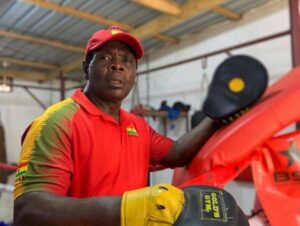
Yet, Ghana has not built the surrounding technical structure, assistant coaches, sports science support, a pipeline of sparring partners and international exposure that would let a coach of his calibre actually convert Ghana’s boxing talent into consistent medals rather than isolated ones.
Investing in one good coach without investing in the system around him only goes so far.
Talent Identification: A Centralised System That Misses the Country
Ghana’s approach to identifying the next generation of athletes remains far too centralised. Several national federations do not organise the kind of regular, nationwide competitions needed to unearth talent outside the country’s traditional sporting hubs.
When identification is left to a handful of clubs and a handful of cities, the country is, by design, overlooking athletes across entire regions.
Grassroots organising still happens, but it happens in spite of the system, not because of it, and it is rare. Independent efforts to stage national level competitions for para-sport, of the kind associated with organisers such as Ken Kalai, CEO of Special Game Masters at Cape Coast in 2023, have in the past helped surface athletes who went on to represent Ghana on the biggest stages, one is Zinabu Issah
Whatever the precise history, the underlying point stands, when talent identification depends on the initiative of a few dedicated individuals rather than a functioning national system, Ghana is leaving its next Zinabu Issah undiscovered somewhere outside Accra.
The Missing Ingredient: Exposure
Ghana’s boxers illustrated this problem in Glasgow as clearly as any statistic could. Many of the country’s boxers spend their preparation cycle sparring within the same small national pool, growing familiar with each other’s rhythm, range and habits. When they step into a ring against opponents from different countries with different systems, different footwork and different fight IQ, the gap in exposure shows immediately, no matter how hard they have trained at home.
Coach Asare made a version of this point himself after the Games, defending his technical team by noting that one of the boxers lost to an opponent who had already competed at three Commonwealth Games and multiple Olympics.
Experience at that level is not built in a domestic gym. It is built through sustained international competition, training camps abroad, invitational tournaments, exposure to opponents who do not fight like the ones back home.
Ghana Boxing Federation president Dauda Fuseini has since called for exactly this kind of investment in a youth succession pipeline ahead of the 2027 African Games and LA 2028 qualifiers. The federations know the diagnosis. What has been missing is the funding to act on it.
What It Would Actually Cost
National Federations are not asking for extravagant sums. A commitment of roughly $100,000 a year, properly directed toward preparation, equipment, coaching support and international exposure, could transform outcomes for a national federation currently operating on goodwill and improvisation.
Ghana’s sport is gradually dying at the elite level, the country no longer produces the generational talents it once did, the Azumah Nelsons whose dominance put Ghana’s boxing on the world map.
Reversing that decline starts at the grassroots, with the young athletes who never get identified, and runs all the way up to coaches like Ofori Asare, who has the certification of a world-class trainer but not the system to match it.
It is time to invest in the sport, not just in the athletes who have already made the podium, but in the ones who never got the chance to try.
Ghana’s talent has never been in question. What Glasgow 2026 confirmed, in the clearest terms yet, is that talent alone cannot carry a country to the medal stage.
Administration, infrastructure and identification all have to be built, deliberately, and long before the year of competition or Ghana will keep showing up to major Games with athletes who have given everything to a system that gave them almost nothing in return.