
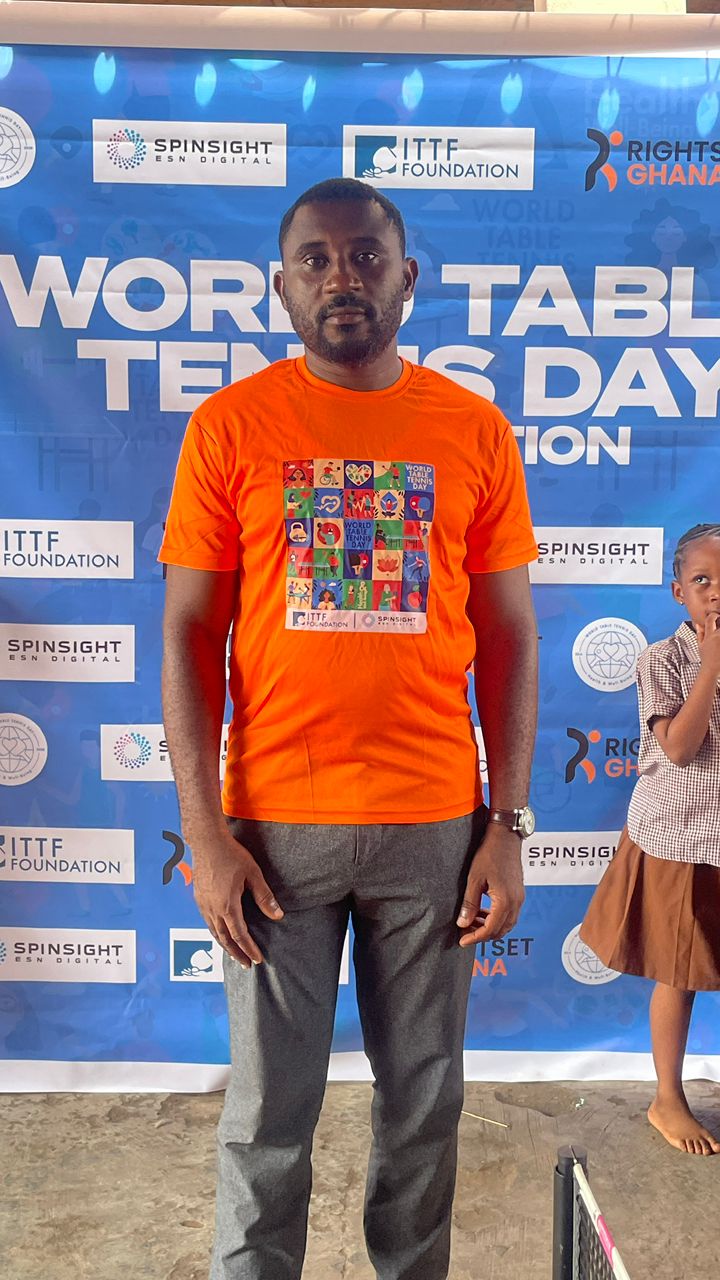
ProjectBonolo, an initiative aimed at strengthening sports development at the grassroots level, is seeking to create pathways for young athletes to develop professionally while making sports more accessible to communities across Ghana.
Speaking on the initiative, Mac Quarshie, Sports Development Officer at the National Sports Authority (NSA) and Chief Executive Officer of ProjectBonolo, said the project is focused on identifying and developing sporting talents from an early age.
According to him, one of the initiative’s main objectives is to ensure that athletes are nurtured professionally from the grassroots, while providing communities with opportunities and facilities to participate in sports.
The main objective for ProjectBonolo is to see athletes develop professionally. You take them from the grassroots and develop them. Secondly, we want to make sports accessible to all,” Quarshie explained.
He noted that the lack of sporting infrastructure remains a major challenge, particularly in some communities where young people have limited access to appropriate facilities.
Quarshie said ProjectBonolo has therefore been engaging communities and individuals to secure land for the construction of sporting facilities, although the initiative has not yet constructed any courts.
We have not actually constructed any courts yet, but we do talk to people. There are communities that have actually given us portions of land. If we get the means to construct, this is where we are going to construct the courts,” he said.
He added that the project continues to engage potential partners and stakeholders because significant resources are required to develop and maintain sporting infrastructure.
Technical Support for Grassroots Development
Beyond infrastructure, ProjectBonolo is also providing technical support to teachers, coaches and officials involved in grassroots sports.
Quarshie explained that the initiative organises training workshops for teachers and other sports personnel in disciplines including netball and handball.
He said the intervention has already contributed to improving the quality and conduct of grassroots competitions.
Formerly, there was no time that a competition finished without a fight. But now, all the teachers that I involved had sat in a training workshop. They have cleared their doubts. They know the rules. So now, the beauty of the game is what is seen,” Quarshie stated.
He said similar technical programmes have been undertaken in handball and other sporting disciplines, with plans to expand the support.
ProjectBonolo is also seeking to introduce first-aid training as part of its grassroots sports development programme.
Quarshie said teachers and sports officials supervising school competitions should have basic first-aid knowledge to respond to injuries before professional medical attention is available.
We are actually also working on getting first aid to them. So that when the child is running in an inter-school game and gets hurt, it shouldn’t be the end of their career,” he said.
According to him, equipping teachers with basic first-aid skills could help protect young athletes and prevent minor injuries from becoming more serious.
Quarshie believes that developing athletes consistently from the basic school level will help reduce the pressure on coaches at the secondary and national levels.
He explained that a child who begins playing a sport such as handball at an early age can develop the necessary skills over several years before progressing to senior high school and eventually national teams.
If somebody starts playing handball in Class Three and continues playing like that, when the person gets to SHS, the teacher will not struggle to teach the person the basic skills. The national team, the U15 and U17, will already have a well-made player,” he said.
He stressed that the grassroots system must therefore serve as the foundation for the development of future national athletes.
ProjectBonolo’s Success Stories
Quarshie also highlighted some of the initiative’s success stories, including the identification of young talents from schools and communities outside Ghana’s major sporting centres.
He disclosed that ProjectBonolo identified a female athlete from Kumasi Girls’ Senior High School whose performances attracted attention and demonstrated the potential of the programme to uncover talent through the school system.
He further revealed that the initiative has helped identify a young female athlete from the hinterlands who has since progressed to become part of the Black Damsels team that won the CAF Under-15 Inter-School competition held at the University of Ghana, Legon.
According to Quarshie, such outcomes demonstrate the potential of a structured grassroots development system to discover talents who might otherwise remain unnoticed.
Call for Support
Despite the progress made, Quarshie said ProjectBonolo requires greater support to expand its operations and reach more communities.
He identified technical support, sporting equipment, financial resources and stronger government backing through the educational system as key areas where assistance is needed.
He said the educational system has shown interest in the ProjectBonolo concept, but implementation has yet to fully take off.
Quarshie expressed optimism that stronger collaboration between the initiative, government, educational institutions, communities and other stakeholders could provide young athletes with the environment needed to develop their talents.
He said the ultimate goal is to establish a sustainable grassroots sports system where young people have access to facilities, qualified personnel, equipment, safety support and a clear pathway to professional and national-level competition.