
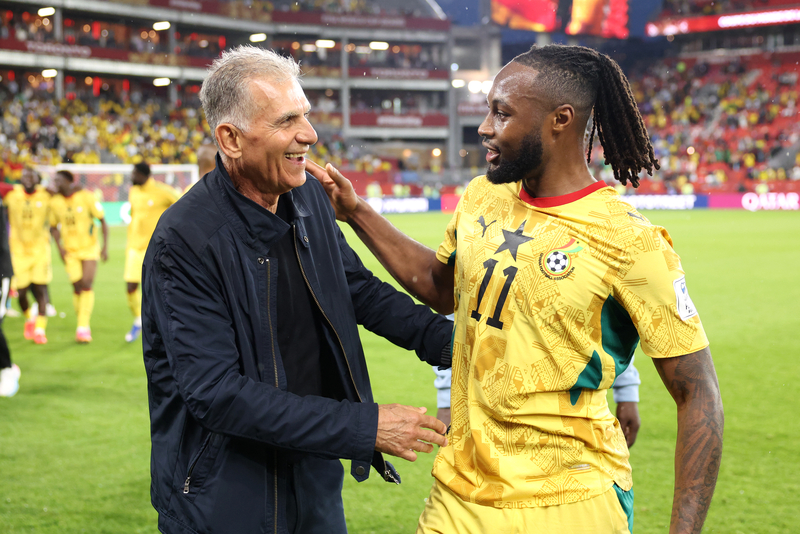
Carlos Queiroz left Ghana the way he arrived, on his own terms, with dignity, and without controversy of his own making.
His farewell letter, warm, reflective, entirely gracious, but the applause for the man should not be allowed to drown out a harder conversation about the plan, because Ghana now finds itself exactly where it was in April, without a head coach, weeks away from the start of 2027 Africa Cup of Nations qualifying, having just spent its World Cup cycle on a short-term appointment built to expire the moment the tournament ended.
When the GFA hired a 73-year-old coach in April on a contract designed to run only until August, centred entirely on the World Cup, did it solve Ghana’s football problem or simply rent a result?
The numbers, on their face, vindicate the decision. Ghana reached the knockout stage for the first time in sixteen years. Queiroz became the oldest manager in history to win a World Cup match. The Black Stars were competitive against Colombia to the final whistle, undone by a single defensive lapse rather than outclassed. Judged purely on the pitch, the appointment worked.
The future of the Black Stars will not be built only on the pitch, Black Stars success must start off the field.” Carlos Queiroz, farewell statement
Read generously, that is a coach offering wisdom on his way out. Read less generously, it is a pointed admission from the man who just ran the program that nothing structural was fixed during his tenure, because nothing structural was ever part of the job he was hired to do.

Ghana risks repeating this same scramble every two years, hiring a marquee name to chase a result rather than developing a footballing identity. The extension clause, tied to a quarter-final finish, reveals a federation planning for a best-case scenario rather than committing to one.
Ghana is, once again, coachless at a moment that demands continuity. AFCON qualifying does not wait for a search committee. The Ghana Football Association now must either move quickly and risk another short-term fix, or move deliberately and risk entering a qualifying campaign without settled leadership, the very instability that Queiroz’s own appointment was supposed to interrupt.
There is also a bigger question beyond tactics. why does the GFA keep hiring experienced foreign coaches for short-term jobs instead of developing it’s own coaches or African coaches for the future? This is not about Carlos Queiroz’s ability. It is about whether Ghana is building a strong coaching system for the long term.
Reaching a higher level should never be the destination, it should be the beginning of even greater ambitions.” Carlos Queiroz
It is a fine sentiment. Whether the Ghana Football Association treats it as a genuine mandate or as a graceful line in a farewell letter will say more about the country’s football future than anything that happened in Kansas City.