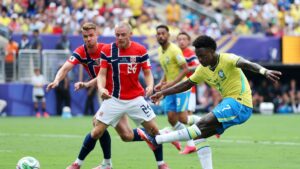
Brazil’s 2026 FIFA World Cup campaign has ended in familiar, painful fashion. A 2-1 Round of 16 defeat to Norway in New Jersey has confirmed what many feared for the Seleção, when it matters most, in the knockout stages, European opposition continues to be their kryptonite.
Erling Haaland was the executioner. His header in the 78th minute broke the deadlock, before a stunning long-range strike in the 89th minute sealed Brazil’s fate. Neymar’s stoppage-time reply arrived far too late to matter, serving only as a footnote of dignity in what will be remembered as one of the darkest nights in the history of Brazilian football.

The result marked Brazil’s first Round of 16 exit since Italy 1990, when Diego Maradona’s Argentina ended their run at the same stage.
Since claiming their fifth star in 2002, Brazil’s story against European nations in World Cup knockout football has become one of the sport’s most striking narratives of underachievement relative to history and pedigree.
2006 Quarter-final: France ended Brazil’s title defence in Frankfurt.
2010 Quarter-final: The Netherlands overturned an early deficit to send Brazil home.
2014 Semi-final: Germany’s 7-1 demolition in Belo Horizonte remains one of the most surprising results in World Cup history.
2014 Third-place play-off: The Netherlands again got the better of a shattered Brazilian side on home soil.
2018 Quarter-final: Belgium’s golden generation eliminated the Seleção in Kazan.
2022 Quarter-final: Croatia won on penalties after a tense 1-1 draw in Qatar.
2026 Round of 16: Norway, led by Haaland’s brace, delivered the latest and arguably most humbling blow.
Each of these defeats has come at the hands of a different European nation, underlining that this is not the story of a single rival’s dominance, but something structural, a recurring inability to get past European opposition once the tournament reaches its knockout phase.
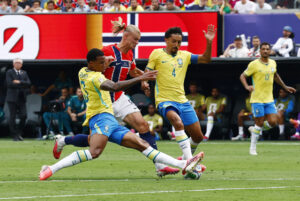
Brazil’s 2002 final victory over Germany remains their last knockout-stage win against European opposition at a World Cup. Everything since, across four different tournaments and now a fifth, spanning 24 years has ended the same way whenever a European side has stood between Brazil and the next round.
The recurring failure has spanned different coaches, different generations of players, and dramatically different tactical approaches.
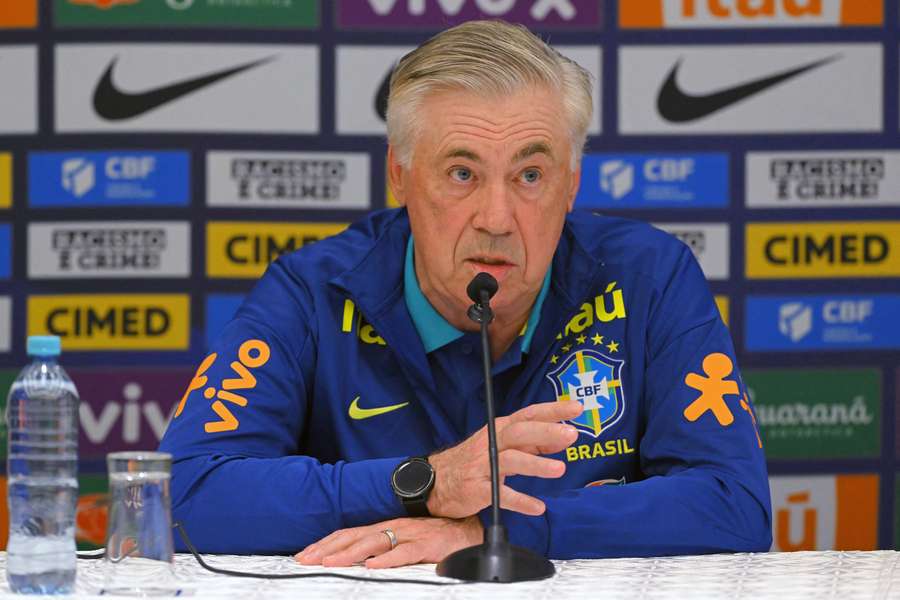
From Dunga to Scolari, from Tite to Carlo Ancelotti, no Brazilian coaching regime has found the formula to break the trend. Neither has any generation of players from Ronaldinho and Kaká to Neymar and Vinícius Júnior been able to reverse it when it has mattered most.