
Exclusive: Nigeria Celebrates Commonwealth Games Success Despite Lower Gold Medal Haul, Says Daniel Adesina
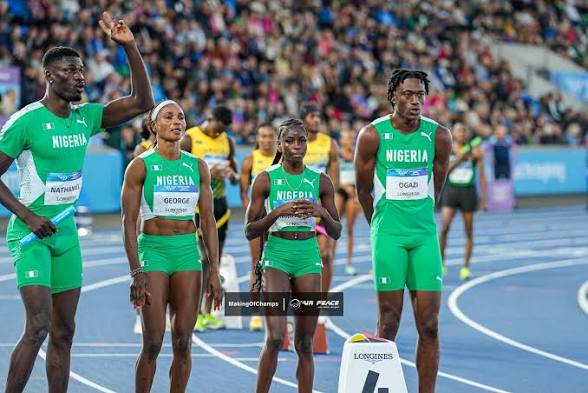
Nigeria has emerged from the 2026 Commonwealth Games in Glasgow with renewed optimism after finishing as Africa’s best-performing nation, despite collecting fewer gold medals than at the previous edition in Birmingham.
Team Nigeria secured 24 medals comprising 10 gold, seven silver and seven bronze to top the African medal standings. Although South Africa won more medals overall with 28, its tally of seven gold medals left it three behind Nigeria, allowing the West African nation to finish as the continent’s leading team.
Kenya placed third among African nations with 12 medals, while Mauritius and Cameroon completed the continent’s top five. Ghana finished with just two medals, one silver and one bronze in 30th place.
The performance has been widely celebrated across Nigeria, with President Bola Tinubu joining sports enthusiasts in congratulating the athletes for their achievements in Glasgow.
While the country won four fewer gold medals than the 14 it claimed at Birmingham 2022, many observers believe the overall performance should be viewed within the context of a reduced sports programme at the 2026 Games.
Nigerian broadcaster, football writer and NPFL commentator Daniel Adesina Ayooluwa spoke exclusively to The BAC Sports and revealed that the mood across the country has been overwhelmingly positive following the Games.
“Nigerians are delighted with the performance and also finishing as number one amongst Africa’s participants at the event,” Ayooluwa said in an exclusive interview.
He acknowledged that while a few high-profile athletes did not meet expectations, others produced memorable performances that reinforced Nigeria’s reputation as one of Africa’s leading sporting nations.
Reduced Programme, Strong Return

Ayooluwa believes comparisons with Birmingham 2022 should consider the smaller number of medal events staged in Glasgow.
“We got about 14 gold medals at the 2022 event. In 2026, we couldn’t get up to that amount. You can also consider the fact that the amount of events the Nigerian athletes had to participate in had reduced. That’s one of the things to consider,” he explained.
Despite the decline in gold medals, he argued that Nigeria maximised its opportunities in the available competitions.
“With the amount of events available and the amount of sports available for Nigeria, we did astonishingly well,” he added.
Nigeria’s success was underpinned by standout performances in athletics, a sport that has consistently produced global stars for the country. Although hurdles queen Tobi Amusan was among the athletes whose campaign fell short of expectations, other track and field competitors stepped up with medal-winning displays, ensuring Nigeria maintained its dominance over its continental rivals.
Building Towards Los Angeles 2028
Beyond the medal count, Ayooluwa believes Glasgow has provided encouragement ahead of future international competitions, including the 2027 African Games and the 2028 Olympic Games in Los Angeles.
He said Nigeria has traditionally performed strongly at the Commonwealth Games and African Games, but translating that success to the Olympics remains the country’s biggest challenge.
“I would want to be positive,” he said. “We always do well at the Commonwealth Games. Now we’re translating it to other events globally.”
However, he cautioned that significant work remains if Nigeria is to become a consistent Olympic medal contender.
According to Ayooluwa, better preparation, stronger athlete support systems and continued investment by the National Sports Commission will be crucial over the next two years.
“We always go to the Olympics and do not deliver,” he observed, attributing the country’s struggles largely to inadequate preparation and planning.
While he believes recent reforms introduced by the National Sports Commission are beginning to yield results, he insists sustained investment will be needed to convert Commonwealth success into Olympic glory.
The broadcaster said the prevailing feeling among Nigerian sports administrators and supporters is one of confidence rather than complacency. He noted that the Glasgow performance has demonstrated the country’s depth of talent and provided a platform on which future success can be built.
For Nigeria, finishing as Africa’s top nation in Glasgow reinforced its standing as one of the continent’s sporting powerhouses. While the medal haul may not have matched the record set in Birmingham four years earlier, the dominant sentiment at home is that Team Nigeria exceeded expectations under the circumstances and remains on an upward trajectory heading into the next Olympic cycle.