
Former NFL Players With Severe CTE Face Higher Dementia Risk, Study Finds
Former National Football League players with severe chronic traumatic encephalopathy (CTE) were significantly more likely to have dementia before death, according to a major new study published in the British Medical Journal (BMJ).
Researchers examined 338 former NFL players whose brains were donated for postmortem examination and found that 104, or 30.8%, had stage IV CTE, the most severe stage of the disease. Of those studied, 202 players, representing 59.8%, had also been diagnosed with dementia by study clinicians.
The study found that stage IV CTE was associated with a 44% increased risk of dementia. Researchers reported a risk ratio of 1.44, with a 95% confidence interval of 1.16 to 1.78 and P<0.001.
The findings are significant because the relationship between CTE and dementia has remained an area of debate. While previous studies have found high rates of dementia among people with severe CTE, the latest research examined the relationship within a larger cohort of former NFL players whose deaths were systematically identified.
“Stage IV CTE was associated with study clinician diagnosed dementia,” the researchers reported, reinforcing evidence that the most advanced form of the brain disease is linked with significant cognitive decline.
The study examined 1,712 former NFL players who died between 2008 and 2021. Of these, 338 donated their brains for examination, with CTE identified in 315 cases, or 93.2%.
However, researchers warned against interpreting that figure as the prevalence of CTE among all former NFL players. Because brain donation was voluntary and potentially influenced by symptoms experienced before death, the researchers calculated a range rather than a single prevalence estimate.
Dementia frequently missed on death certificates
One of the study’s most striking findings was the difference between dementia identified through detailed clinical assessment and what appeared on death certificates.
Among the 202 brain donors who were diagnosed with dementia by study clinicians, only 82, or 40.6%, had a neurodegenerative disease recorded as either their primary or secondary cause of death.
Just 63 donors, equivalent to 18.6% of the total brain-donor group, had neurodegenerative disease listed as their primary cause of death.
The researchers said this highlights the limitations of using death certificates to measure dementia and related neurological conditions. They noted that previous research has shown that death certificates can substantially underdiagnose dementia.
In this study, dementia was determined through reviews of available medical records and clinical histories, with at least two clinicians discussing each case before reaching a decision based on established diagnostic criteria.
The average age at dementia onset among affected donors was 63.4 years, while their average age at death was 73.1 years.
Researchers caution against simple cause-and-effect claims
Although the findings strengthen the association between severe CTE and dementia, the study does not establish that CTE alone caused cognitive decline in the former players.
Researchers noted that CTE can occur alongside other neurodegenerative diseases, including Alzheimer’s disease. Brain tissue was therefore examined for multiple forms of neuropathology rather than CTE alone.
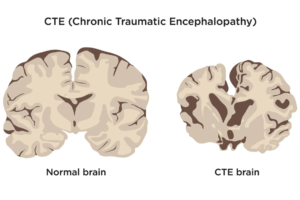
CTE itself can currently be diagnosed definitively only after death. Neuropathologists examined brain tissue for the characteristic accumulation of abnormal phosphorylated tau protein around blood vessels in the depths of cortical sulci.
The researchers also attempted to address the potential bias created by brain donation. Because players with neurological symptoms may have been more likely to have their brains donated, the study used inverse probability weighting to account for differences between donors and the wider population of deceased NFL players.
The authors concluded that the findings provide important evidence about the clinical relevance of CTE among athletes exposed to repetitive head impacts.
“Among NFL player brain donors, dementia diagnosed based on records before death was common and associated with stage IV CTE,” they stated.
The research adds to a growing body of evidence linking repeated head impacts in contact sports with long-term neurological problems, while also underlining the need for further research into how CTE develops, how it manifests clinically and which former athletes are most vulnerable to its effects.