
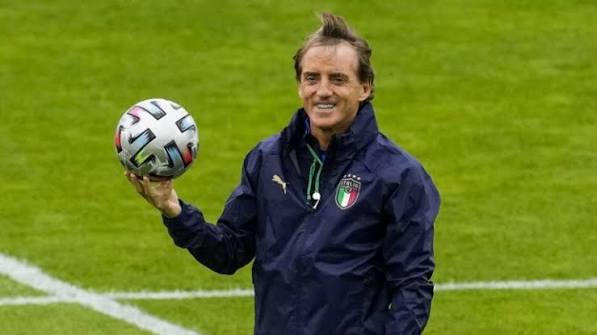
Italy have opted for a familiar solution to one of the biggest challenges in their recent football history, reappointing Roberto Mancini as head coach following a turbulent managerial search that exposed growing divisions within the Italian Football Federation (FIGC).
The decision ends weeks of uncertainty after Gennaro Gattuso departed in April, following Italy’s failure to qualify for the 2026 FIFA World Cup. The latest setback marked the third consecutive World Cup the four-time champions will miss, intensifying demands for sweeping changes within the national team setup.
Mancini’s return comes after Andrea Pirlo unexpectedly withdrew from contention amid controversy surrounding his reported links to a Russian betting company. What had appeared to be a straightforward appointment quickly unravelled, forcing the federation to revisit its options.
The coaching saga also triggered changes at executive level. Technical director Paolo Maldini resigned after only two weeks in the role, with adviser Leonardo also stepping down following disagreements over Pirlo’s failed appointment. Veteran coach Claudio Ranieri has since been appointed as the federation’s new technical director.
A Proven Winner Faces a Different Challenge
For FIGC president Giovanni Malago, bringing Mancini back represents an attempt to restore stability after weeks of uncertainty. The 61-year-old remains one of Italy’s most accomplished modern coaches, having transformed the national team during his first spell between 2018 and 2023.
His greatest achievement came with Italy’s UEFA Euro 2020 triumph, while his side also established a world-record 37-match unbeaten run. Those successes, however, were ultimately overshadowed by the shock World Cup qualifying defeat to North Macedonia, which denied Italy a place at the 2022 finals and cast doubt over the team’s long-term progress.
After resigning in 2023, Mancini briefly managed Saudi Arabia before taking charge of Qatari champions Al Sadd. Although he guided the club to the Qatar Stars League title, they fell short in both the AFC Champions League Elite and the Qatar Cup before he left the club in June.
His return suggests the federation values continuity over experimentation. Italy had reportedly explored high-profile alternatives, including Pep Guardiola and Carlo Ancelotti, before Pirlo emerged as the preferred candidate. Yet the federation ultimately settled on the man who already understands the demands of leading the Azzurri.
The appointment has generated cautious optimism rather than universal celebration. Mancini’s previous tenure demonstrated his ability to rebuild a struggling national team, but it also ended with one of the darkest moments in Italian football. That mixed legacy means expectations will be measured not by memories of Euro 2020 but by whether he can finally guide Italy back to the World Cup.
Beyond the dugout, the reshaped leadership structure, with Ranieri replacing Maldini as technical director, points to a broader effort to rebuild confidence throughout Italian football. The federation appears determined to pair an experienced coach with an equally respected football administrator as it seeks long-term stability.
Mancini’s second spell begins with immediate tests in the UEFA Nations League, where Italy host Belgium on September 25 before travelling to Turkey three days later. Those fixtures will offer an early indication of whether the federation’s decision to revisit a successful partnership can help revive one of international football’s most decorated but recently troubled nations.