
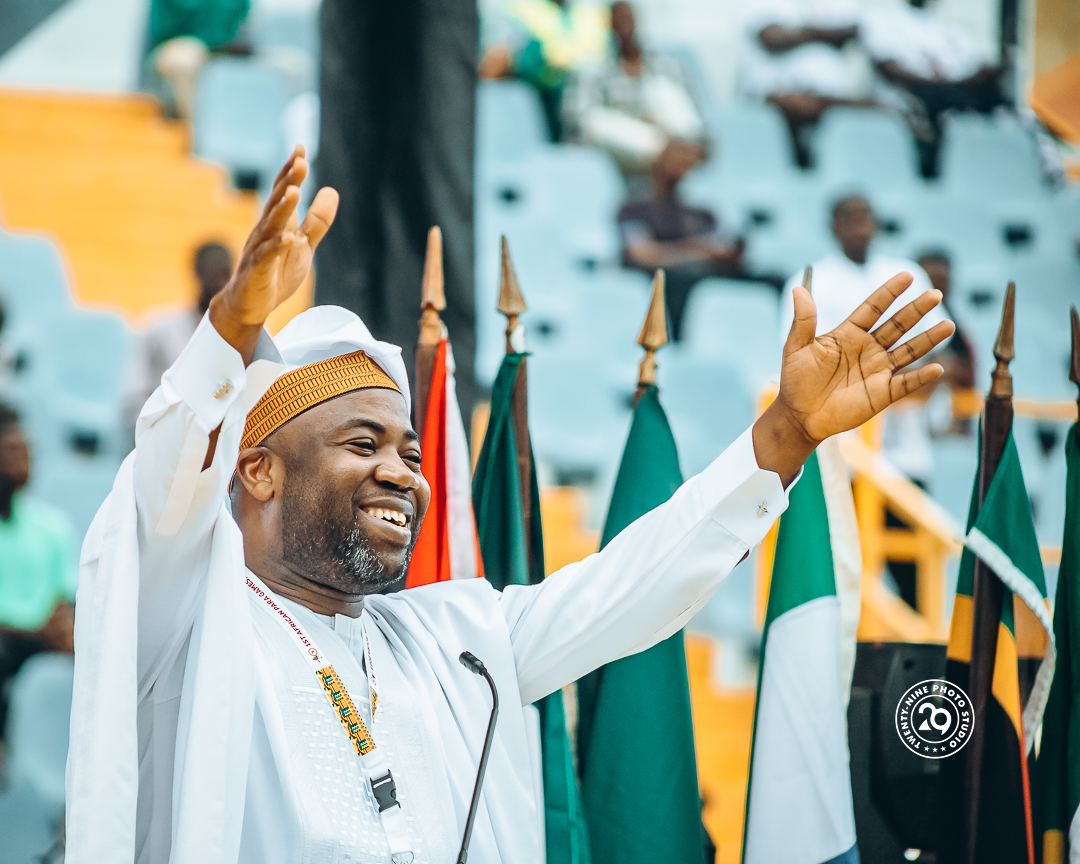
The committee is also expected to court partnerships with corporate organisations, development agencies, diplomatic missions, international sports bodies and the media to help fund and sustain the initiative.
Deen has since linked the Games more explicitly to government policy, framing them as central to President John Dramani Mahama’s sports reform programme.
He has said the Constituency Games represent a decisive pillar of the President’s Reset Ghana Sports Agenda, intended to carry organised sport, talent identification and development opportunities beyond Ghana’s major cities into communities nationwide.
The Constituency Games must not become just another competition on the calendar. They must become a national talent-discovery movement.”Samson Deen, Chair, NSA Resource Mobilisation & Partnership Committee
The proposal has already secured backing at the highest levels of government: in a letter dated September 3, 2025, Chief of Staff Julius Debrah communicated the Office of the President’s support for organising the Constituency Games, and directed the Ministry of Sports and Recreation to coordinate the initiative to ensure it proceeds as planned.
The NSA has since moved into a consultative phase, engaging stakeholders across the country ahead of the Games’ rollout. Deen has confirmed that the RMPC has already engaged all national sports federations and will next visit communities to meet Metropolitan, Municipal and District Assemblies, chiefs, opinion leaders, public and private institutions, government ministers and Parliament, before consulting supporters’ unions to help shape an official Constituency Games Handbook.
Deen has stressed that the success of the Games will hinge on transparency, accountability and effective coordination among stakeholders, calling for clear competition rules, transparent procurement, financial reporting, athlete safeguarding measures, medical protocols and accessible complaint-resolution mechanisms. He has proposed that outcomes be judged not merely by the number of events staged, but by measurable results.
Those markers, he says, should include participation levels across constituencies, the number of athletes identified, representation of women and persons with disabilities, scholarships secured, and the number of athletes progressing to higher levels of competition. To support this, Deen has proposed a national digital database to track athletes’ disciplines, performances, educational status and development history, allowing federations, coaches and scouts to monitor promising talent beyond the competition period itself.
He has further suggested that retired athletes be engaged as coaches, scouts, mentors, technical advisers and administrators, helping to develop the next generation while also giving veteran competitors a continued role in the sport. Delivering the initiative, Deen has said, will require close collaboration among the Presidency, the Ministry of Sports and Recreation, the NSA, Regional Coordinating Councils, District Assemblies, the Ghana Education Service and national sports federations.
A Role for the Media and for Ghana’s Diaspora Communities
Deen has repeatedly called on Ghanaian media houses to engage with the Constituency Games from the grassroots stage rather than only after champions emerge. He has urged journalists not to arrive only once a medal has been won, but to be present from the very start of an athlete’s journey.
The RMPC is understood to be actively seeking media partnerships to help promote transparency and credibility as the Games take shape.
Funding conversations are also under way beyond Ghana’s borders. Deen has disclosed that a number of foreign communities resident in Ghana have expressed willingness to donate toward the Constituency Games project, part of a broader resource-mobilisation push that also includes a forthcoming handbook covering venues, logistics, budgeting and financial management.
Beyond its sporting objectives, Deen has argued that the Constituency Games could carry an economic dimension for host communities, stimulating local activity around venues, hospitality and services during the competition period.