
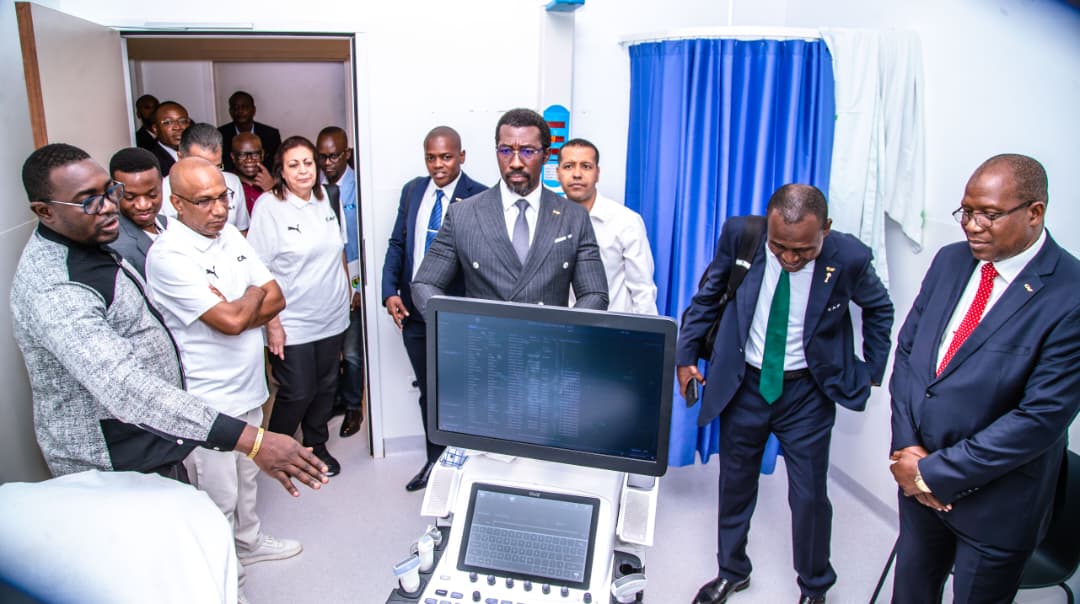
CAF To Tighten Grip on Age Fraud with Fresh Medical Reforms
African football’s governing body, Confederation of African Football (CAF), is taking a firmer stance against age cheating, shifting from concern to enforcement as new medical-driven measures are set to reshape youth competitions across the continent.
At a recently concluded CAF Medical Committee meeting in Lomé, Togo, members agreed on practical steps aimed at eliminating age manipulation, particularly at the grassroots level. The message from the meeting was that credibility in youth football can no longer be compromised.
For Dr. Prince Pambo, a member of the committee and team doctor of the Black Stars, the issue goes beyond rule-breaking. He sees it as a systemic problem that has denied genuine young talents their rightful opportunities.
We agreed on a few things to see how we can sanitise that age group so that the appropriate people with the right ages will be given the opportunity to compete.
His comments reflect a growing urgency within CAF to fix what many believe is a long-standing flaw in Africa n football development.
Early Intervention at Youth Level
Rather than waiting to detect irregularities at higher levels, CAF is now targeting the problem at its earliest stage. U-15 competitions have been identified as a key battleground, with tighter controls expected to be implemented to prevent manipulation before it spreads through the system.
Central to this effort is the use of Magnetic Resonance Imaging (MRI), which will continue to serve as a scientific benchmark for verifying player eligibility.
Dr. Pambo made it clear that the process will not be relaxed. “People will still have to go through the MRIs just to ensure that passing the MRI is one of the added eligibility criteria,” he noted.
The emphasis on early screening suggests CAF is attempting to reset the foundation of youth football rather than applying temporary fixes.
Reforms Extend Beyond Age Verification
While age cheating remains the headline issue, the Medical Committee’s discussions revealed a broader agenda focused on player welfare and integrity in Africa.
Pre-competition medical assessments (PCMA) will become more rigorous, with players required to undergo full health evaluations before participating in any season. “At the beginning of every season, players will have to do this pre-competition medical assessment comprehensively,” Dr. Pambo explained.
Anti-doping education also featured prominently, with CAF urging its member associations to go beyond testing and invest in awareness campaigns that shape player behavior from an early stage.
In addition, plans are underway to establish Medical Centres of Excellence across CAF’s regional zones, including WAFU A, WAFU B, COSAFA, and CECAFA. These facilities are expected to standardize medical practices and provide specialized care tailored to footballers.
Dr. Pambo, who also contributes to sports cardiology initiatives at the international level, stressed that these reforms are interconnected.
Basically, the role of the medical committee is to discuss all medical matters relating to the game on the continent.
The underlying message from CAF is uncompromising. Cleaning up age fraud is not an isolated mission, it is part of a larger attempt to restore trust in African football’s development system.
READ: Owusu Out, Obeng In: Kotoko’s Coaching Crisis Continues