
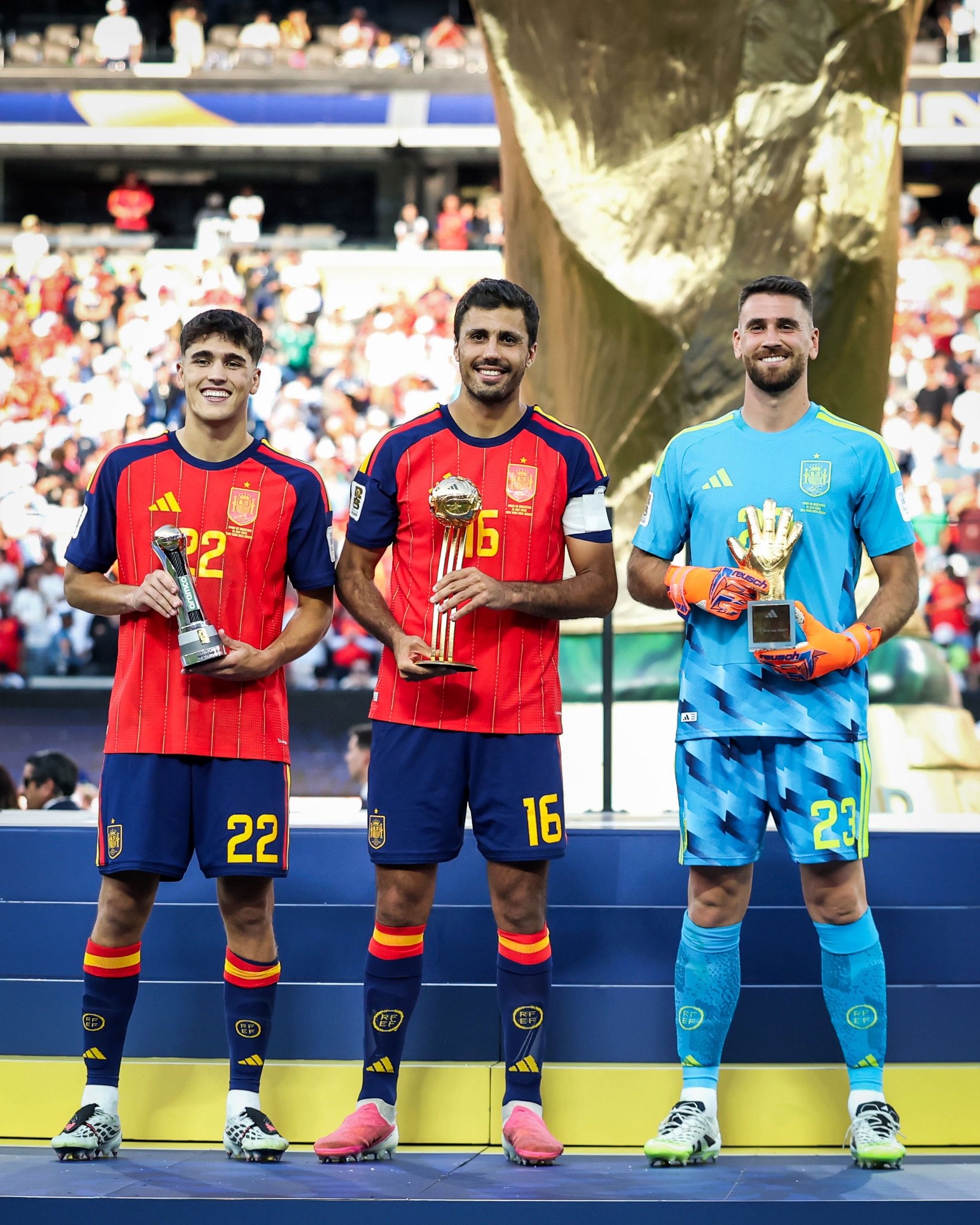
Spain are champions of the world once more. A 1-0 victory over Argentina in extra time at MetLife Stadium in East Rutherford, New Jersey, secured La Roja’s second FIFA World Cup title and completed one of the most dominant international eras in the sport’s history.
Ferran Torres, introduced from the bench, settled a tense and largely one-sided final when he fired home in the second period of extra time, capping a tournament in which Spain conceded just a single goal across eight matches.
The victory extends an extraordinary sequence of success for Spanish football in major tournaments this century. Spain have now won all five of the European Championships and World Cups they have contested since 2008, a run unmatched by any country in the modern era of international football.
2008 · EURO
2010 · World Cup
2012 · EURO
2024 · EURO
2026 · World Cup
It is the second time in this golden era that Spain have followed continental glory with global conquest, having done so previously between 2008 and 2010. The 2026 triumph arrives sixteen years after their maiden World Cup success, with a new generation of players now stamping their names on the competition’s history books.
Spain dominated the final from start to finish, registering twelve shots on goal to Argentina’s solitary attempt. Standing between them and the trophy for much of the contest was Argentina goalkeeper Emiliano Martínez, who produced a World Cup final record haul of saves to keep the scoreline level deep into extra time. Argentina were further reduced to ten men after Enzo Fernández was shown a second yellow card, compounding their difficulties as Spain continued to press.
The breakthrough finally arrived when Nico Williams headed a ball into the path of Torres, who steered his effort past Martínez in the 106th minute. It proved to be the only goal Spain would need, sealing a result that denied Argentina the chance to become the first side since Brazil in 1962 to retain the World Cup.
Unai Simón’s Quiet Command
Between the posts, Unai Simón was rarely troubled but consistently assured, reflecting the control Spain exerted over the tournament as a whole. His save record across the campaign tells the story of a team that suffocated opposition attacks long before they threatened his goal.
Unai Simón · Saves by Match
Cape Verde -1 save
Saudi Arabia -1 save
Uruguay -1 save
Austria – 0 saves
Portugal – 2 saves
Belgium -1 save
France -3 saves
Argentina – 0 saves
Mbappé Makes History, Cubarsí Announces Himself
While Spain lifted the trophy, France forward Kylian Mbappé claimed the tournament’s individual honours, winning the Golden Boot with ten goals to become the first player in history to win the award in back-to-back World Cups.
His tally matched the mark set by Gerd Müller in 1970, the highest single-tournament return in fifty-six years.

In the final itself, it was 19-year-old Pau Cubarsí who emerged as the standout performer on the pitch, dictating play from central defence with a level of composure well beyond his years.
Pau Cubarsí · Final Performance Leader
139 touches – most of any player
121 successful passes – most of any player
96% passing accuracy – highest of any player
21 line-breaking passes – most of any player
6 clearances – most of any player
A Historic Defensive Record
Spain’s success was built on a foundation of defensive discipline rarely seen in a winning campaign. Conceding just a single goal across eight matches represents the fewest goals shipped by any World Cup-winning side in the tournament’s history, underlining the balance between attacking flair and structural solidity that has defined this Spanish generation.
For Argentina, the defeat marks a fourth World Cup final loss, matching their appearances as runners-up in 1930, 1990 and 2014. It leaves them level with Germany for the most runner-up finishes in the competition’s history, a bittersweet distinction for a country that had arrived in New Jersey hoping to become back-to-back champions.
Sunday’s win stretched Spain’s unbeaten sequence in all competitions to 38 matches, the longest such run ever recorded by a European or South American national team.
By the Numbers
1 goal conceded in 8 games
38 matches unbeaten, all competitions
5 major titles since 2008
106th minute -winning goal
Records Set
Fewest goals conceded by a World Cup winner
Longest unbeaten run (Europe/South America)
First back-to-back Golden Boot winner (Mbappé)
Argentina: joint-most World
Cup runner-up finishes