
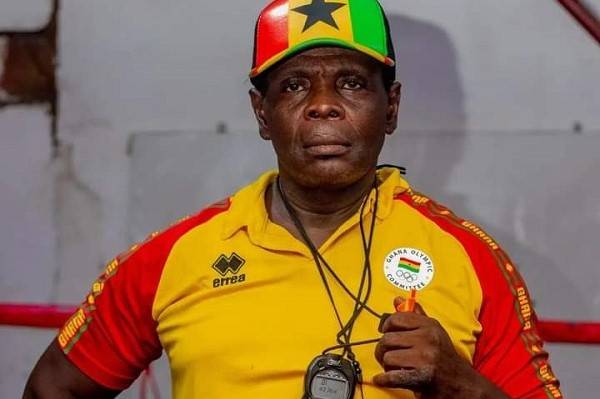
Head coach of Ghana’s national boxing team, the Black Bombers, Ofori Asare, has called for patience and a long-term development plan for the country’s boxers, pushing back against criticism directed at the technical bench following the team’s outing at the 2026 Commonwealth Games in Glasgow.
Speaking after the competition, Asare said it was easy for fans to point fingers at coaches whenever results fell short of expectation, given how closely the technical team works with athletes on a daily basis. But he argued that performance on the biggest stage is shaped by far more than technical instruction alone.
There are so many things that the technical team has to work on, and being a technical person, you are not a magician,” he said. “You need to work practically where it’s necessary.”
Asare pointed to the inexperience of the current squad as a central factor behind the team’s results. Of the boxers who travelled to Glasgow, only one had previous Commonwealth Games experience, for the rest, it was their first appearance at the Games, and for some, their maiden international tournament altogether.
He cited the case of Vincent, who lost to an opponent with three prior Commonwealth Games appearances and Olympic experience, though that opponent had never previously won a medal. For Asare, the result illustrated the gap in exposure between the two boxers rather than a technical shortcoming.
How can you perform a magic to beat somebody who has been to the Olympic Games, the Commonwealth Games three times, and then all of a sudden you come in and beat him?” he said. “I’m not saying it’s not possible, but there are so many factors that we need to work on to support it.”
Asare stressed that judgment on the team’s performance should not rest solely on the experience level of individual athletes, adding that despite falling short of expectations, the squad had performed well given the circumstances.
Looking ahead, the coach raised concerns about the cyclical nature of team composition, warning that Ghana risks fielding another inexperienced squad at the next edition of the Games unless deliberate steps are taken to retain athletes within the system.
What are we going to do to protect them? What are we going to do to make sure that we maintain this team for the next four years?” he asked. “If we come to the next four years and we have the same kind of new team again, we will continue repeating the same story at the end of it.”
He explained that athletes with repeated exposure to major championships adapt more easily to the demands of international competition, from understanding logistics and accommodation to managing the pressure of asking questions in unfamiliar environments, challenges that newer athletes often face without the benefit of prior experience.
Sometimes they don’t even know where to sleep, what to do. When you ask them, it will feel like you are putting unnecessary pressure on them,” he said. “But if they have that experience and exposure already, it’s easy to forge ahead with these kinds of challenges.”
Asare called for a structured approach to retaining talent within the national boxing setup, cautioning against a cycle in which promising athletes move on to other pursuits before their experience can benefit the team long-term.
We should have a way of maintaining our athletes so that they will not go anywhere,” he said. “Otherwise, we’ll continue starting afresh, starting afresh, and people will just be blaming coaches, forgetting that the athletes we brought here are all new to the place we brought them.”
He assured that the technical team remained committed to the programme despite the outcome in Glasgow. “We’ve not given up. We’ll still continue,” he said.