
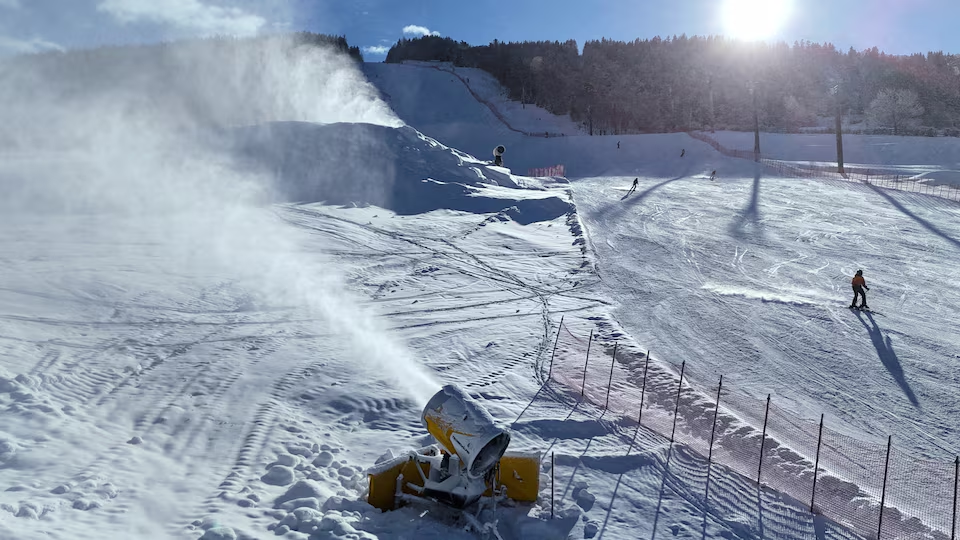
The team preparing the slopes for the Milano Cortina 2026 Winter Olympics is in a race against the clock. As winters grow warmer, the window to create the necessary snow for competition is shrinking, pushing technology and planning to their limits.
Across the Alpine venues in Italy, organizers are depending more than ever on artificial snow. Natural snowfall is becoming less reliable and is declining. This means months of work must be squeezed into short periods of cold weather, leaving little room for mistakes.
At established resorts like Livigno, Bormio, and Cortina d’Ampezzo, infrastructure is being expanded. New reservoirs, pump stations, and snow guns have been added to meet Olympic standards. In Livigno alone, over 600,000 cubic meters of snow have been made since mid-December for events like freestyle skiing and snowboarding.
“The windows to get ready are getting shorter and shorter,” said Nemanja Dogo, a technical manager at snowmaking company TechnoAlpin. The firm has provided systems for several Olympic sites. He explained that a recent cold spell after Christmas, with temperatures near minus 22 degrees Celsius, was a critical chance to produce snow.
Artificial snow needs specific conditions to form well, typically when the “wet-bulb” temperature is around minus 2 degrees Celsius. These cold periods are becoming less common.
Climate researchers say this loss of time is a direct result of warmer winters. “It’s not just that you’re losing natural snow, you’re also losing the days that you need to make snow,” said Professor Caitlin Hicks Pries of Dartmouth College, who studies winter climate change. She notes that Europe, especially its southern regions, is highly exposed to these “snow droughts.”
This pressure forces resorts to produce huge amounts of snow very fast during brief cold snaps. This strains energy systems, equipment, and staff.
Snowmaking technology has improved greatly over the past 20 years. Automation and better forecasting have made the process faster. Twenty years ago, preparing a key slope could take 150 hours. By 2018, it was down to 100 hours. Now, many resorts aim to do it in about 50 hours.
Yet, even with these advances, the central challenge remains: the weather is changing faster than the technology can adapt. The success of the Winter Games increasingly depends on perfectly timed, massive efforts during increasingly narrow windows of cold.