
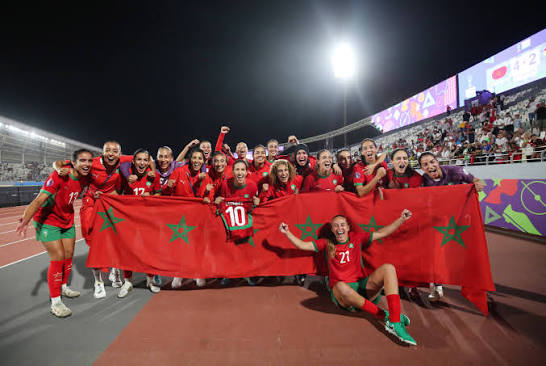
Morocco has pulled out of hosting the 2026 Women’s Africa Cup of Nations (WAFCON). The decision comes just two months before the tournament was set to begin and follows a period of strong public feeling after the chaotic final of the men’s Africa Cup of Nations (AFCON) held in Morocco in December 2025 to January 2026
South Africa was quickly announced as the new host country on Sunday night. The news was shared by South Africa’s Deputy Minister of Sport, Arts and Culture, Peace Mabe, at an awards event in Johannesburg.
“Tonight I would like to announce that South Africa will be hosting the 2026 WAFCON,” Mabe said. The tournament is important as it qualifies teams for the 2027 Women’s World Cup in Brazil.
Moroccan authorities have not given an official reason for their withdrawal. However, it follows weeks of heated debate within the country after Senegal beat Morocco 1-0 in the AFCON final in Rabat. That match was marked by protests, a short walk-off by Senegalese players, fan confrontations, and several punishments from the Confederation of African Football (CAF).

While Senegal won, the event was overshadowed by disorder. In Morocco afterwards, many people expressed strong disappointment online and in public discussions. Some began to question why Morocco should keep hosting major African football events, feeling the country faced constant criticism despite its large investments in stadiums, security, and organization.
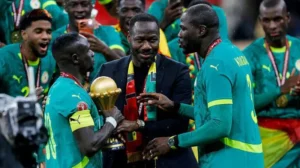
Others across Africa saw Morocco’s withdrawal as a reaction to losing the final, calling it the move of a “bad loser.”
CAF had earlier rejected a request from the Moroccan football body to overturn the AFCON final result. This added to a sense in Morocco that their efforts in African football were not being valued, and that hosting brought more blame than credit.
The timing of this decision, only 60 days before WAFCON 2026, shows a deep breakdown between diplomacy and the politics of continental football. It created an immediate problem for CAF, as the women’s tournament has grown to 16 teams and is key for World Cup qualification.
South Africa, which won the WAFCON title in 2022, now takes on the challenge. The country has the needed facilities and recent experience, but the last-minute change puts pressure on them to prepare quickly.
This situation points to dissatisfaction among Moroccan authorities. Hosting big tournaments has become more political, and Morocco’s exit asks difficult questions about what happens when a host nation’s willingness runs out.
CAF has not yet made a public statement about Morocco’s withdrawal. For now, the focus turns to South Africa and ensuring the 2026 Women’s Africa Cup of Nations goes ahead smoothly for the teams and fans.