
As Ghana’s Black Stars set their sights on the 2026 World Cup, co-hosted by the USA, Canada, and Mexico, much of the conversation revolves the squad selection for the tournament.
There are a lot of deficiencies in the team, one that Coach Otto Addo would like to solve before the tournament kicks off. The defense and midfield it’s one that needs solving immediately.
But the strikers of the team needs to assessed critically in terms of their form and numbers.
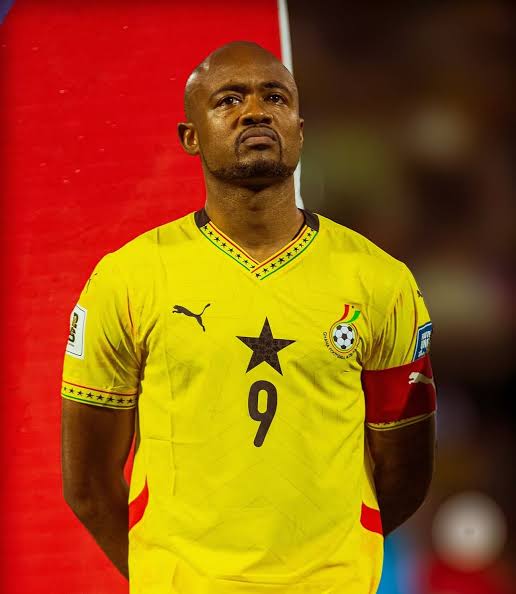
Our leading marksman and Captain, Jordan Ayew was nothing short of inspirational during the qualifying campaign, recording a staggering 7 goals and 7 assists, 14 goal involvements in total, to lead his country to 8 crucial victories.
His leadership and big-game temperament silenced critics and cemented his status as the heartbeat of the team.
However, with the World Cup on the horizon, a closer look at Ayew’s club form at Leicester City this season presents a more complicated picture.
The data from his Championship campaign, suggests a player whose influence at club level is markedly different from his heroics in the Black Stars Jersey.
From his numbers at Leicester City’s season, Ayew has made 36 appearances in the Championship, starting 24 of those matches. He has logged a total of 2,174 minutes, averaging 60 minutes per game. While his presence on the pitch has been consistent, his attacking output has been modest.
In all club competitions for the 25/26 season, he has scored 5 goals and provided 3 assists across 39 matches, with all 5 goals and 3 assists coming in league play.
A deeper dive into the underlying numbers raises further concerns.
Ayew’s expected goals (xG) figure stands at 5.08, closely matching his actual tally of 5 goals, indicating he is performing roughly as expected in front of goal. However, his scoring frequency is a worrying 435 minutes per goal, and he averages just 1.2 shots per game, with only 0.4 of those landing on target.
He has also missed one big chance, relatively low number that reflects his limited involvement in high-probability scoring situations.
In terms of creativity, Ayew has registered 3 assists, slightly above his expected assists (xA) of 1.86. He has created 5 big chances and averages 0.7 key passes per game, with 27.0 touches per match, figures that point to a player operating on the periphery of Leicester’s attacking play rather than serving as a central figure.
For a player who turns up so consistently for his country, the contrast between his international form and his club output is stark. Ayew was the engine behind Ghana’s attack in qualifying, helping the Black Stars finish as the highest-scoring team in their group.
Yet at Leicester, he has been a rotational contributor rather than a decisive force.
So, should Ghanaians be worried? The answer is layered. Ayew has proven time and again that he reserves his best for the national team, and his leadership and work rate remain invaluable.
However, with the World Cup fast approaching, his lack of sustained sharpness and limited goal contributions at club level could be a concern, especially if he is expected to carry the same attacking burden he did in the qualifiers.
Ultimately, while Jordan Ayew’s form at Leicester City may not be setting the Championship alight, his pedigree for Ghana remains unquestioned. The Black Stars will be hoping that when the captain trades his Leicester blue for the national colours, the familiar spark returns to propel Ghana on the biggest stage of all.