
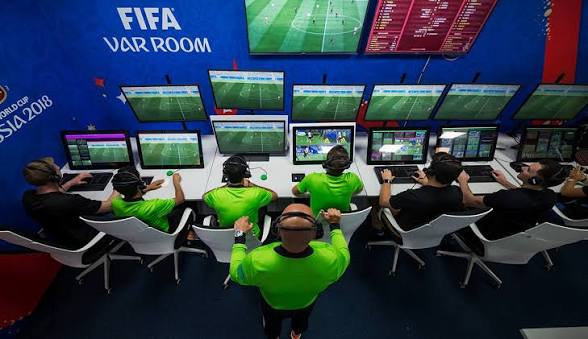
FIFA has approved a sweeping set of law amendments spanning throw-ins, substitutions, off-field treatment, and VAR protocols designed to stamp out time-wasting and sharpen the game’s competitive integrity ahead of the tournament in the United States, Canada, and Mexico.
The changes, which address long-standing concerns around deliberate time-wasting, disruptive player behaviour, and the scope of video review, represent the most comprehensive overhaul of in-game regulations to be applied at a World Cup in previous tournaments.
The reforms come as football administrators intensify efforts to maximise active playing time. Data from major tournaments has consistently shown that only a fraction of each 90-minute contest involves genuine ball-in-play action, with tactical stoppages from slow throw-ins to prolonged medical interventions l accounting for lost time. The 2026 tournament, the first to feature an expanded 48-team format, is expected to be a stage on which these measures will be enforced.
Restart Protocol: Five-Second Throw-In Countdown
One of the most frequently exploited time-wasting tactics in football, the slow throw-in will now be subject to a strict five-second countdown. Under the new provision, if a player in possession of the ball deliberately delays restarting play by holding it or taking unnecessary time, the referee is empowered to award the throw-in to the opposing team. The amendment places renewed pressure on wide players and full-backs, who have often used throw-in situations near the corner flag to kill momentum in the closing stages of matches.
Goalkeeper Protocol: Five-Second Goal-Kick Countdown
Goalkeepers, who have long been permitted to hold the ball at their feet for extended periods before taking goal-kicks, will now face an equivalent five-second restriction. Should a goalkeeper be deemed to be deliberately running down the clock, the referee may award a corner kick to the attacking side. The introduction of this rule is particularly notable given that goalkeepers under defensive pressure have regularly used such tactics to reorganise a back line or allow a team to catch its collective breath. Referees will be required to exercise careful judgment to distinguish deliberate delay from legitimate goalkeeping preparation.
Personnel Change: Time-Limited Substitutions (10 Seconds)
In what is likely to be one of the most consequential changes for both managers and players, substituted players will be required to leave the field within ten seconds of being signalled off, and must do so at the nearest point on the touchline rather than walking the length of the pitch. Failure to comply will result in a severe penalty. The incoming substitute will be barred from entering the field for a minimum of one minute, and the team will be forced to play with ten men in the interim.
Medical Protocol: Off-Field Treatment: One-Minute Absence Rule
Players who receive medical treatment from a physiotherapist on the pitch during the run of play will now be mandated to leave the field for a minimum of sixty seconds before being permitted to return. The regulation is intended to discourage the tactic of feigning or exaggerating injury to secure a stoppage in play, and to ensure that the on-field numerical advantage gained by the treating team’s opponents is not immediately erased upon the resumption of play. Exceptions have been built into the framework, however. Goalkeepers are exempt from the one-minute rule, as are players suffering genuine injuries or those who are caught up in incidents that result in the booking or dismissal of an opponent.
Player Conduct: Mouth-Covering in Confrontations: Red Card Offence
In a measure designed to preserve the integrity of referee decisions and prevent coordinated dissent, any player observed covering their mouth while engaging in a confrontational exchange with an opponent, a practice suspected of facilitating coordinated abuse of officials or abusive communications may now be shown a straight red card. The amendment reflects growing concern within football’s governing bodies about covert communication strategies that undermine respect for match officials and the spirit of fair play. Referees will retain discretion in assessing context, but the inclusion of this provision signals a clear statement of intent regarding player conduct at the 2026 tournament.
VAR Protocol: Corner Kicks Now Subject to Review
The Video Assistant Referee system will be extended to encompass the verification of corner kicks that may have been incorrectly awarded. Previously, VAR intervention in dead-ball decisions was inconsistent and subject to debate; the new protocol formalises a pathway for referees to quickly check, before the restart, whether a corner kick was the correct call. Crucially, this review must be conducted swiftly so as not to introduce unnecessary delays into the game. It is important to note, however, that the expanded VAR scope does not work in the opposite direction, wrongly awarded goal-kicks will not be subject to review under this amendment, an asymmetry that may invite scrutiny as the tournament unfolds.
Disciplinary Review: Second Yellow Cards Eligible for VAR Check
Perhaps the most technically nuanced of the seven amendments pertains to the use of VAR in disciplinary matters. When a player is dismissed following two cautions, the second of those bookings, the one that effectively results in a sending-off will now be eligible for a VAR review. This creates a mechanism through which a potentially unjust red card, arising from an accumulation of cautions, can be corrected in real time. However, the framework contains a notable limitation. VAR will not be activated to identify potential second yellows that have gone unpunished. In other words, the review system is reactive rather than proactive. It corrects incorrect dismissals but does not hunt for further discipline that referees have opted against imposing.